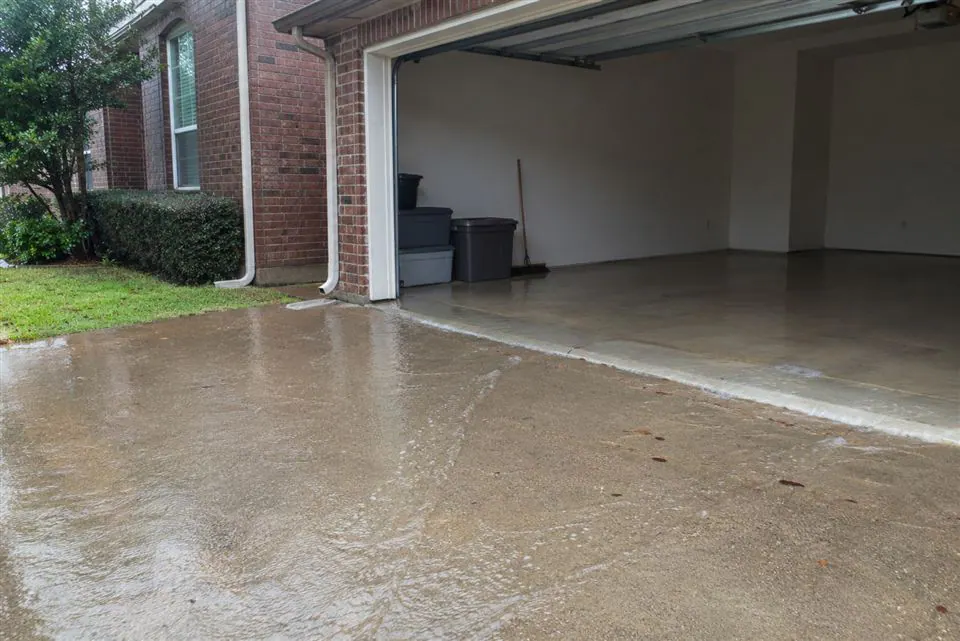
Possible cause 1
Hardscape pitched toward a threshold
Driveway or deck elevations send sheet flow toward a garage, door or lower paved area.
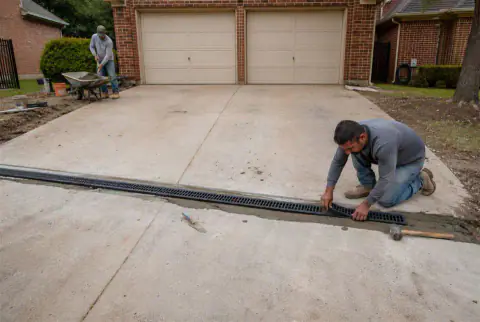
Drainage symptom guide
Runoff moving across a driveway, pool deck or other hardscape can bypass a short drain and reach garages, doors or lower landscape areas. The flow width, surface elevation, grate, channel support and outlet must be evaluated together.
How this problem can be solved
A channel or trench drain can collect sheet flow crossing concrete when it spans the active wet width, sits below the approaching surface and connects to a solid outlet route. Driveway traffic, pool users and the surrounding concrete determine the grate and support detail.
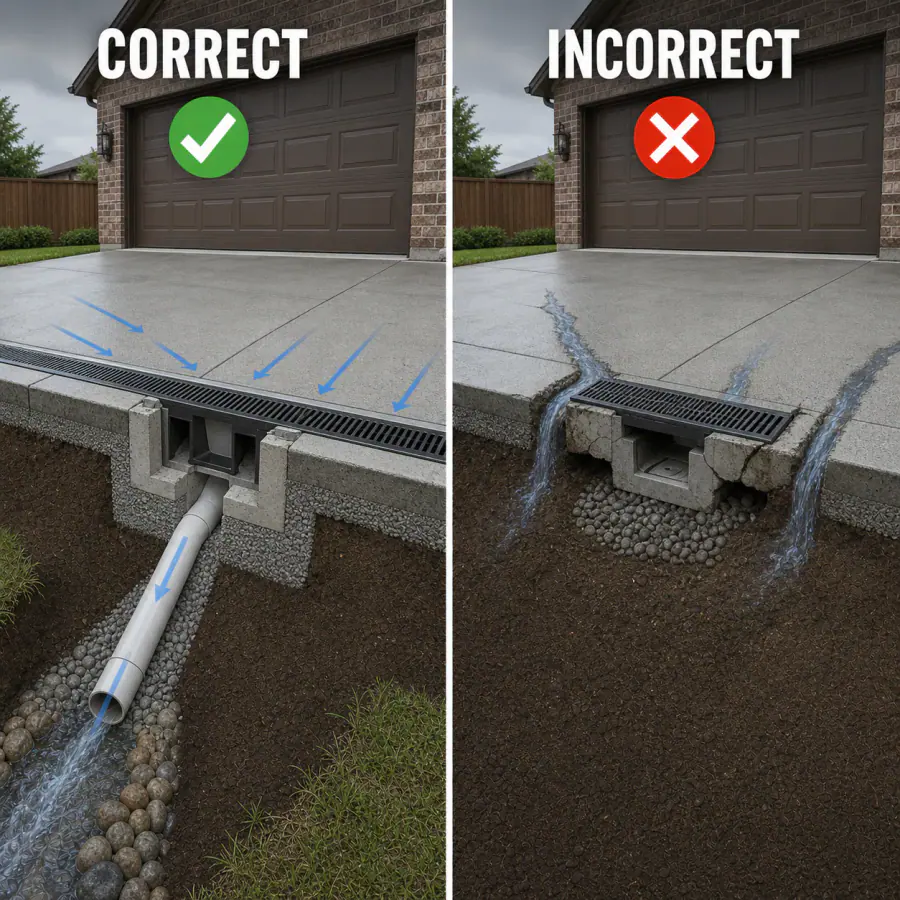
Extend the drain beyond both edges of the active flow and build the channel, grate, pipe and outlet as one rated route.
Cut in a short decorative grate without checking vehicle loads, surface elevations or downstream capacity.
Generated educational illustration. It explains a possible design direction; the final system depends on property measurements and is not presented as a completed project.
Record where water first appears and the direction it moves.
Include roofs, hardscape, irrigation and water entering from outside the immediate low spot.
No collection method works indefinitely without a safe, serviceable place to release water.
Recognize the symptom
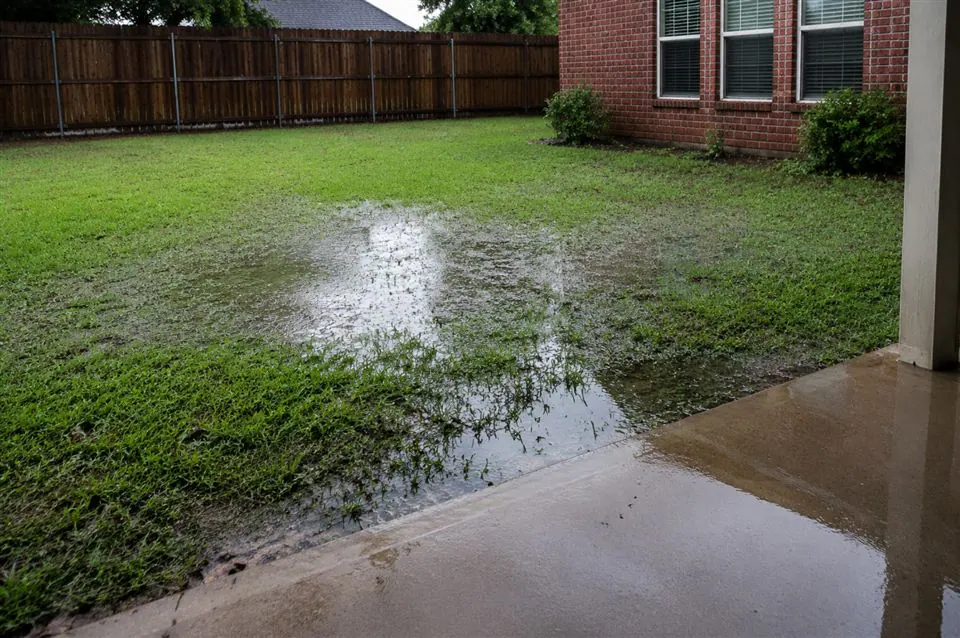
The photograph shows the condition at a useful scale. Wide views help trace the source better than a tight picture of water alone.
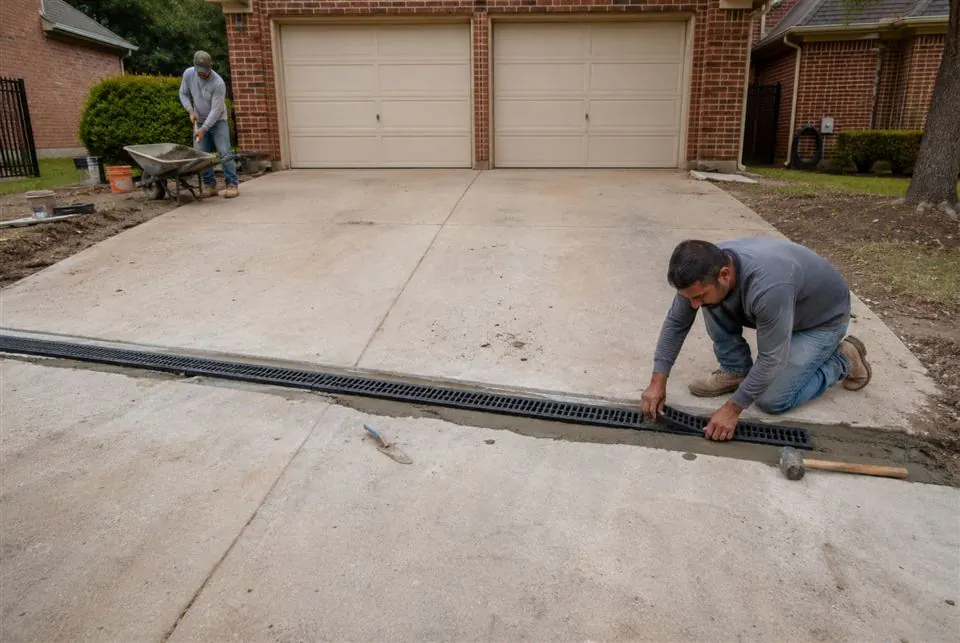
Plain-language explanation
Concrete does not absorb rainfall where it lands, so runoff follows the slab pitch. A long shallow sheet of water needs to be intercepted across its path; a small grate beside that path may collect almost nothing.
Assessment checks impervious contributing area, sheet-flow width, approach depth, channel intake, grate openings and load class, structural bedding, outlet connection, pipe capacity, invert fall and terminal discharge.
Plausible causes
The assessment separates the inputs before recommending a product or excavation.
Possible cause 1
Driveway or deck elevations send sheet flow toward a garage, door or lower paved area.
Possible cause 2
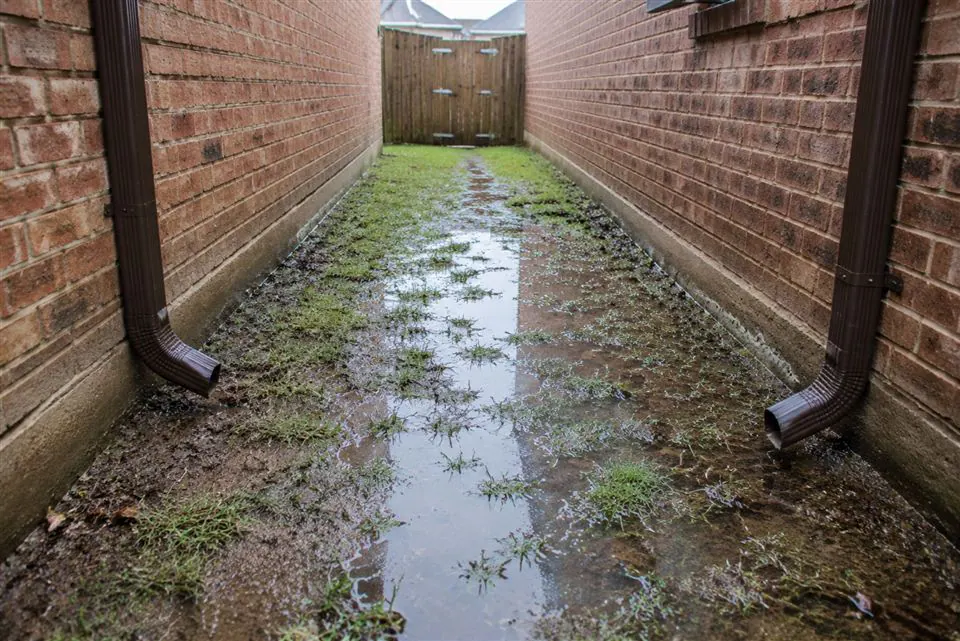
Roof, lawn or neighboring hardscape adds water beyond the rainfall landing on the concrete.
Possible cause 3
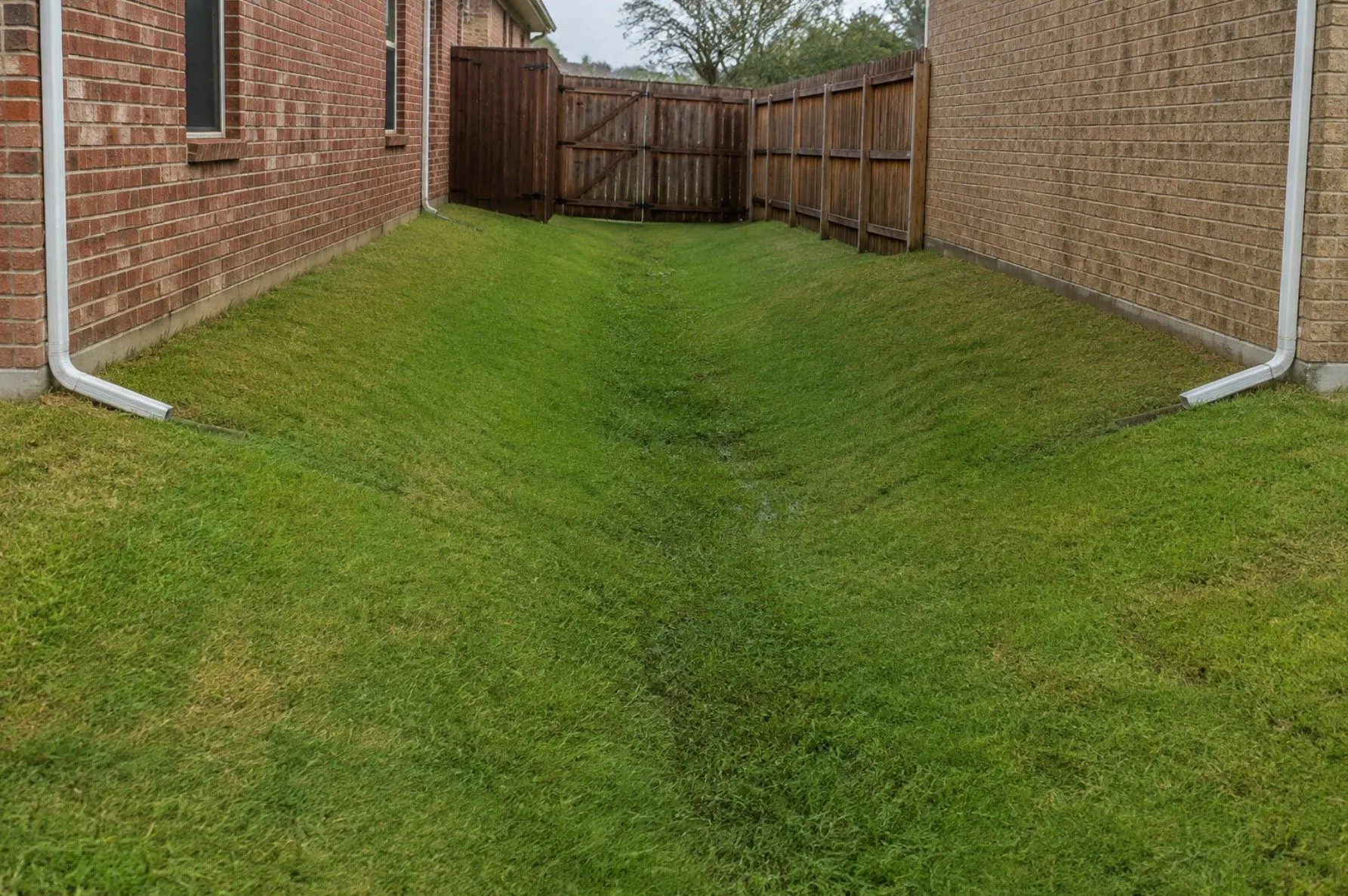
Water passes around one or both ends of an undersized channel.
Possible cause 4
The grate accepts water, but a flat pipe, obstruction or elevated discharge keeps the channel full.
If the condition continues
Not every wet area produces every outcome, but repeated water can make the yard harder to use and allow secondary problems to develop.
The severity depends on how often water returns, how long it remains and what surfaces or structures are nearby.
The severity depends on how often water returns, how long it remains and what surfaces or structures are nearby.
The severity depends on how often water returns, how long it remains and what surfaces or structures are nearby.
The severity depends on how often water returns, how long it remains and what surfaces or structures are nearby.
Symptom → cause → solution
| What the assessment finds | Direction to evaluate |
|---|---|
| Water crosses the surface | Grading, swale, channel drain or surface inlet |
| Water arrives from a downspout | Solid underground downspout drainage |
| Water moves through saturated soil | French drain or another subsurface collection route |
| An existing drain backs up | Inspection, cleaning or targeted repair |
| Water can be collected but no lower gravity outlet exists | Outdoor sump pump basin and pressure discharge route |
Useful homeowner guidance
Local drainage guidance
The symptom page explains the cause-and-solution logic. The linked city pages add municipal sources, local development context and service-area details without duplicating this guide.
Each city guide combines the regional drainage method with verified local context, common property conditions and direct links to the relevant problem and service pages.
Water Crossing a Driveway or Pool Deck FAQ
These answers are general. Final recommendations depend on the property, elevations, utilities and outlet.
The useful comparison is how this area behaves versus surrounding surfaces after the same rain. Record the timing rather than relying on a single photo.
Filling a depression without preserving a lower path can move water toward the house, fence or another part of the yard.
Only if subsurface collection fits the actual source and a usable outlet exists. Surface or roof water may need a different first choice.
Only when water can be collected but measured elevations do not provide a dependable gravity route to a safe lower outlet.
Wide photos during rain, close photos of inlets and downspouts, the approximate wet duration and the property ZIP code.
Assessment first
Photos during or immediately after rain are especially useful.