Symptom guide
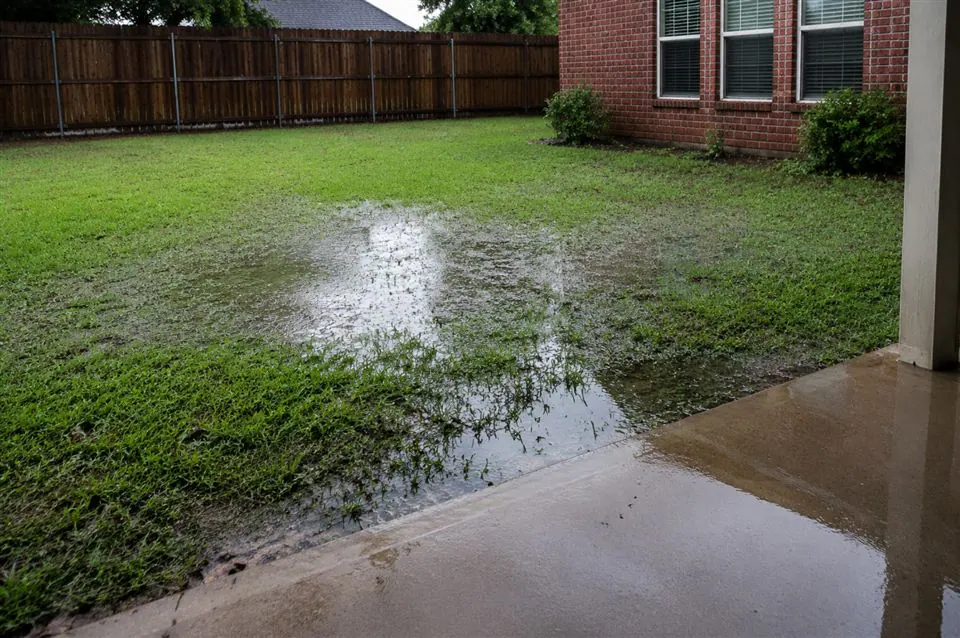
Standing Water in the Yard
Water remaining after nearby surfaces have drained usually means the yard has a low elevation, a blocked route, concentrated inflow or soil that cannot release water fast enough.
Review causes →
Start with the symptom
Where water appears, when it starts, how fast it moves and how long it remains are more useful than guessing a drain type.
Problem pages
Every problem has its own photograph, safe checks, plausible causes, possible consequences and solution directions.
Symptom guide
Water remaining after nearby surfaces have drained usually means the yard has a low elevation, a blocked route, concentrated inflow or soil that cannot release water fast enough.
Review causes →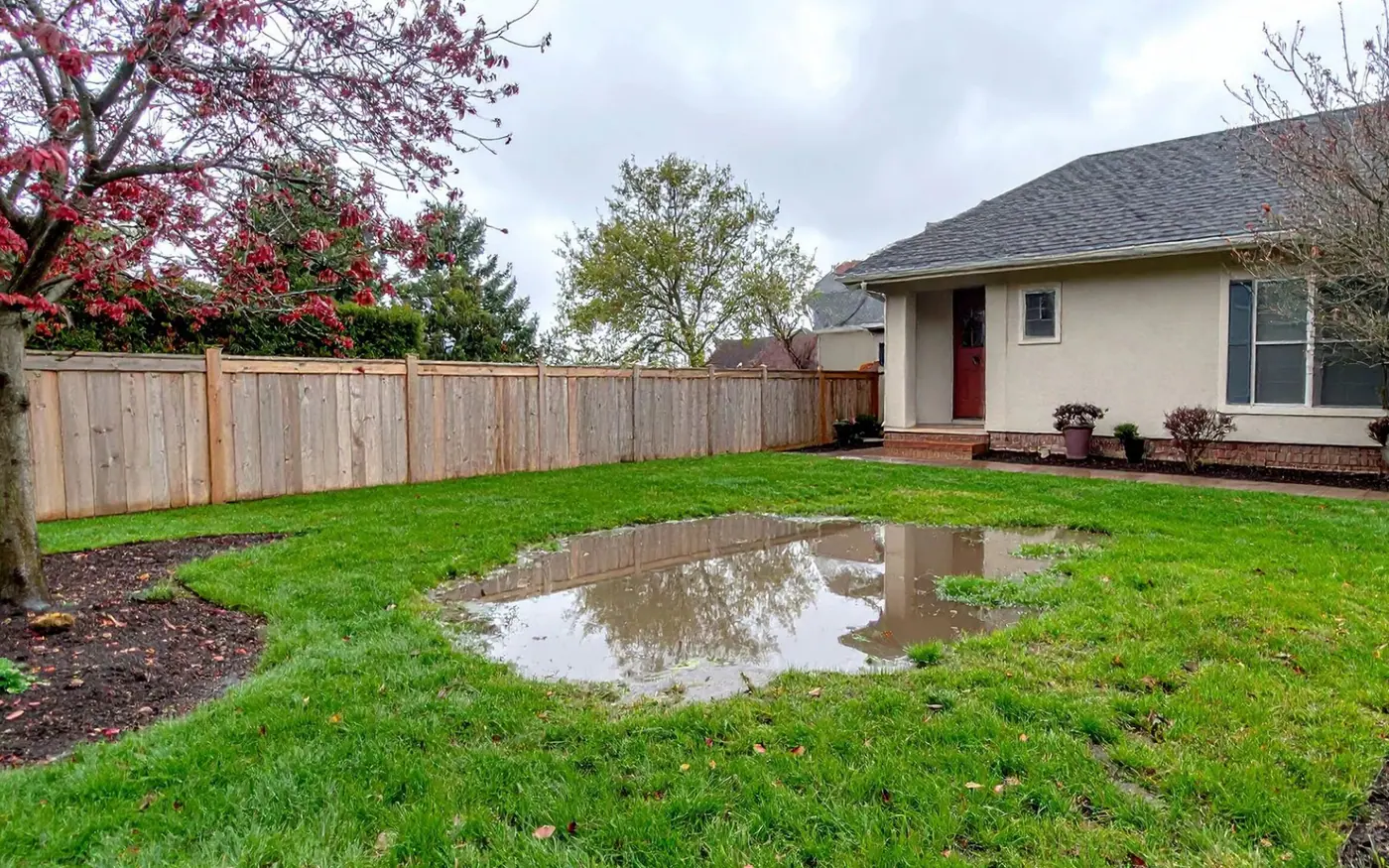
Symptom guide
Fast flooding points to how much water arrives and where it comes from. Roof areas, neighboring grade and hard surfaces may be contributing more volume than the visible low spot suggests.
Review causes →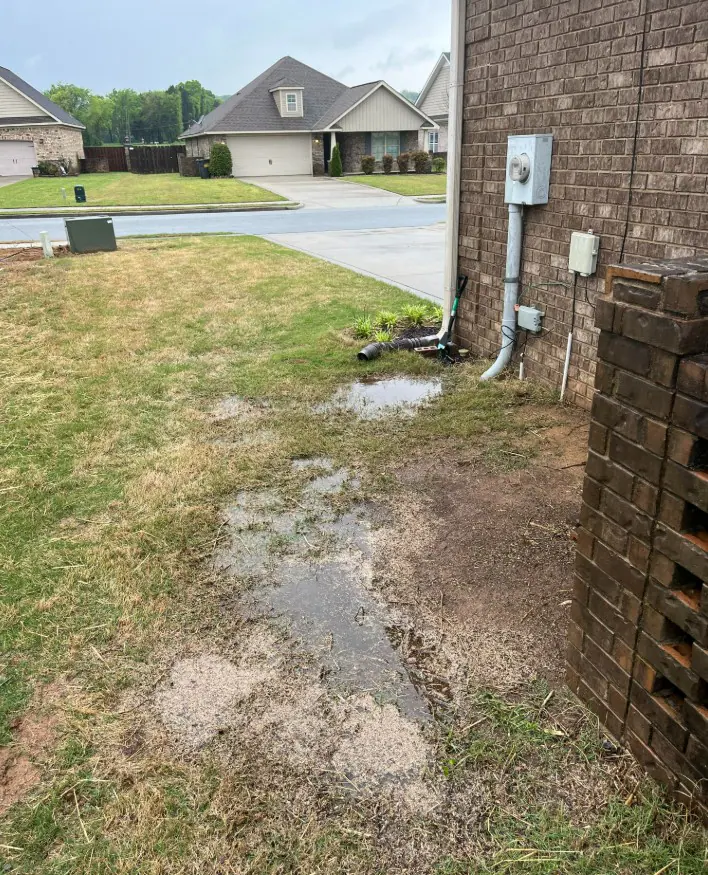
Symptom guide
Soft soil without a deep puddle can indicate slow surface drainage, repeated irrigation, shaded evaporation or subsurface saturation along a corridor.
Review causes →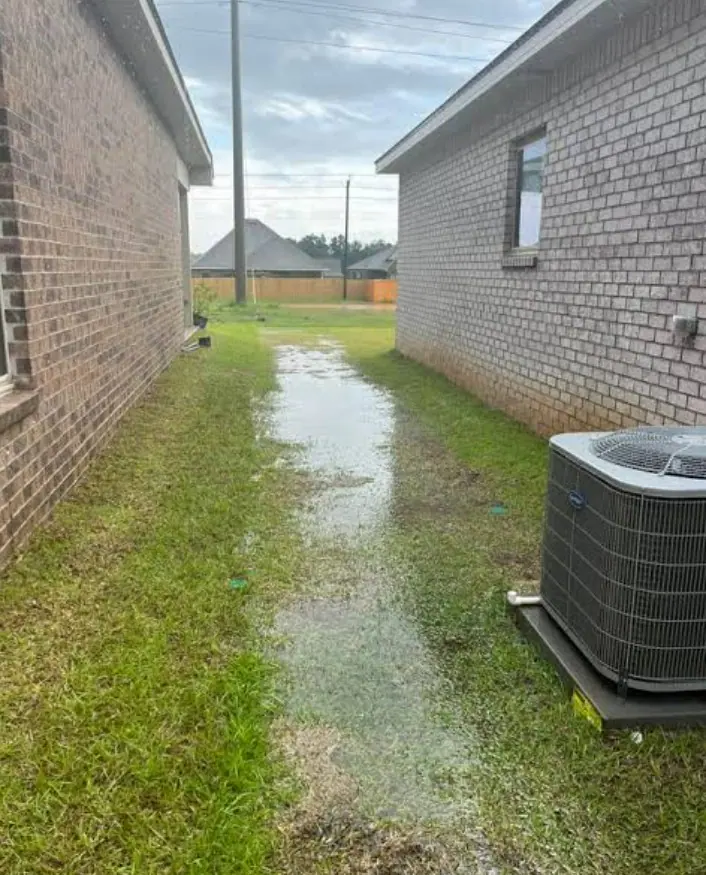
Symptom guide
The useful question is not only how deep the water becomes, but whether the surface has a continuous lower route and whether an existing system can still discharge.
Review causes →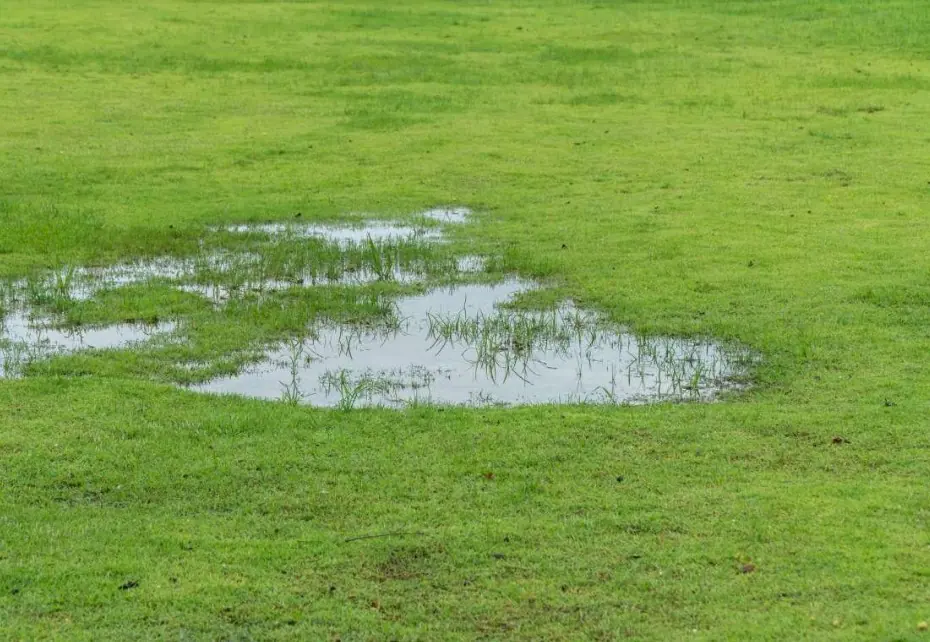
Symptom guide
An isolated depression may accept a surface inlet, shallow regrading or a combination—but only if collected water has somewhere appropriate to go.
Review causes →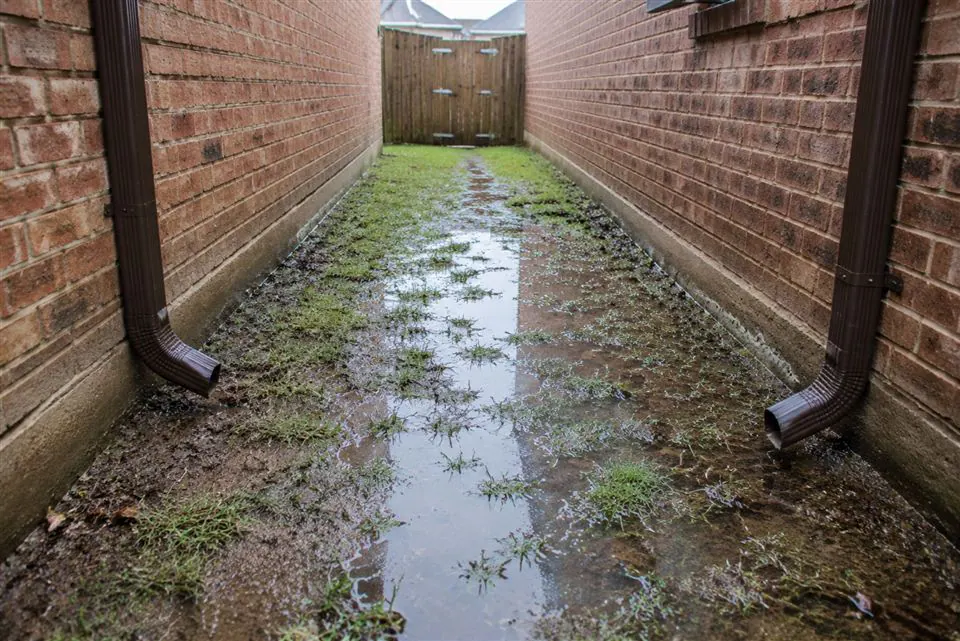
Symptom guide
Narrow side yards often receive roof water from two structures while fences, utilities and limited elevation restrict the available route.
Review causes →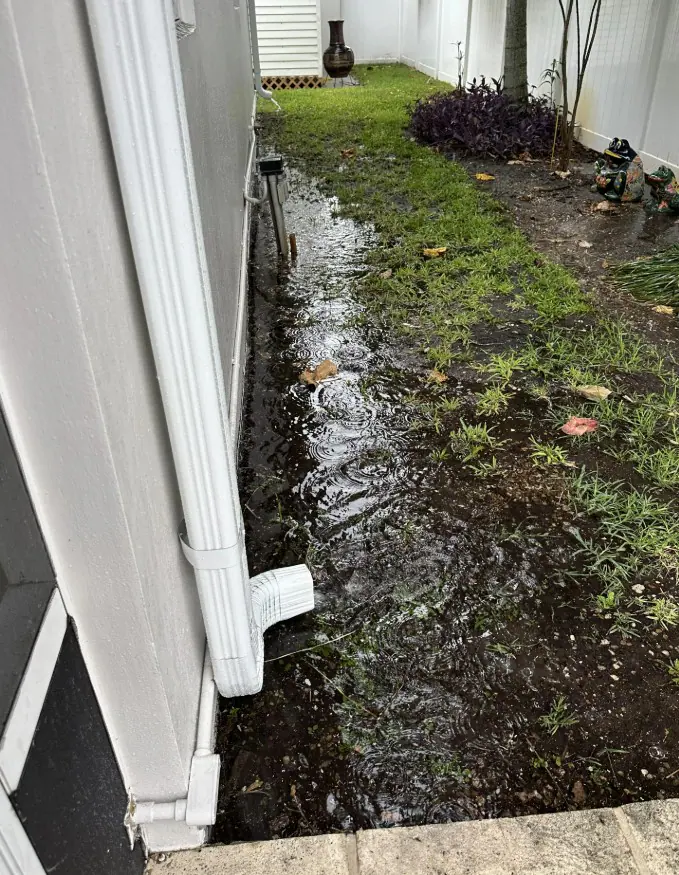
Symptom guide
Downspouts, roof valleys, reverse grade and blocked side-yard flow can keep water beside the slab. Drainage work manages the water; it does not diagnose structural damage.
Review causes →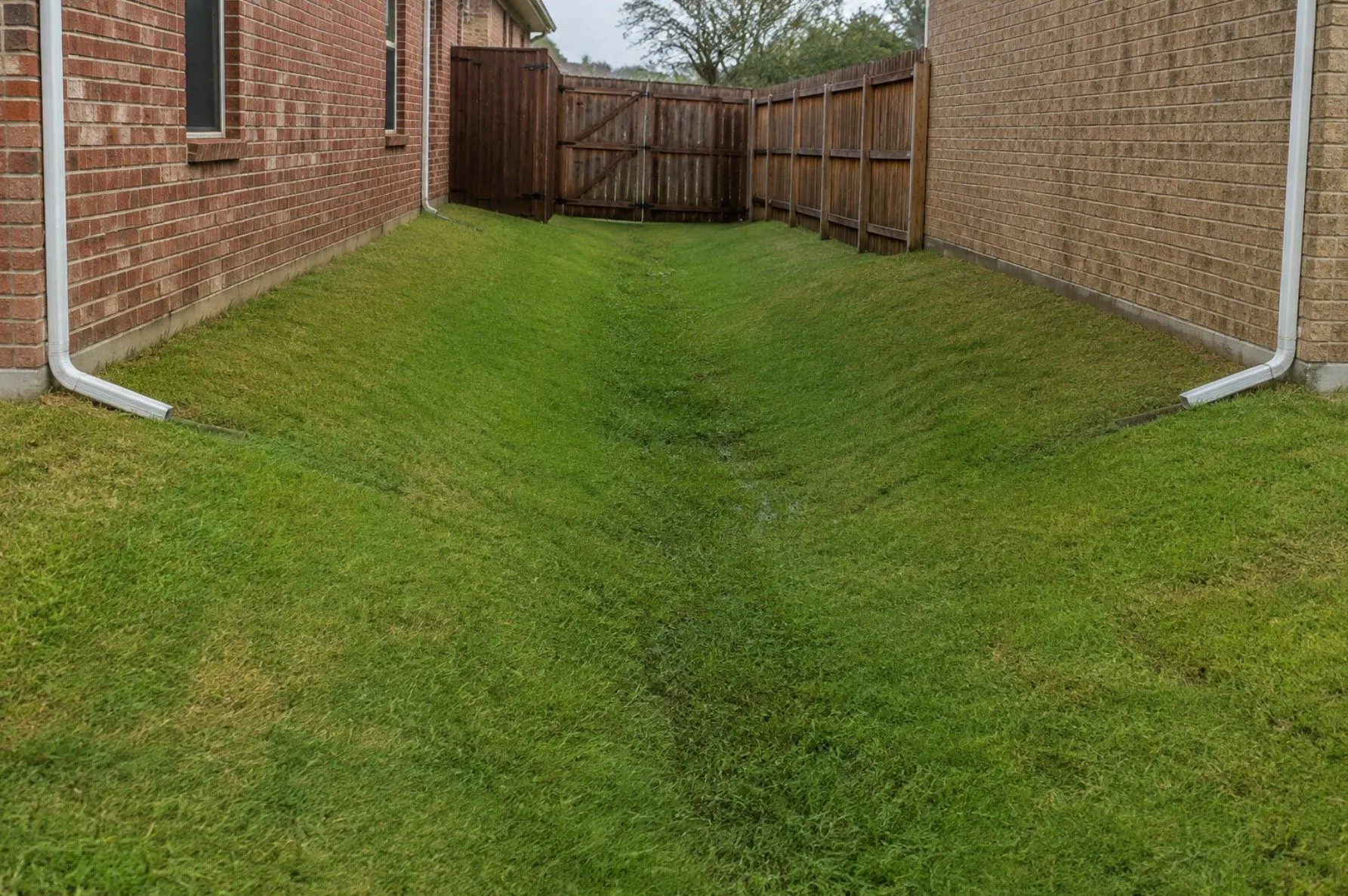
Symptom guide
The visible slope may carry broad surface runoff toward the slab, patio or door. Elevations determine whether the route can be reversed, intercepted or collected.
Review causes →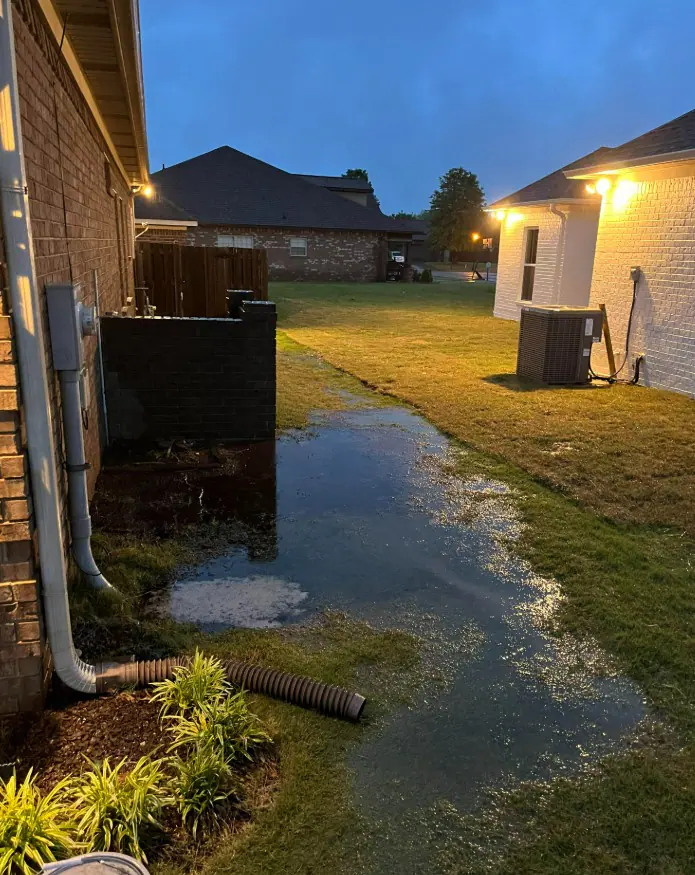
Symptom guide
One downspout can release a large roof area into a small patch of soil. Keeping that water contained in solid pipe may be more direct than treating the whole lawn.
Review causes →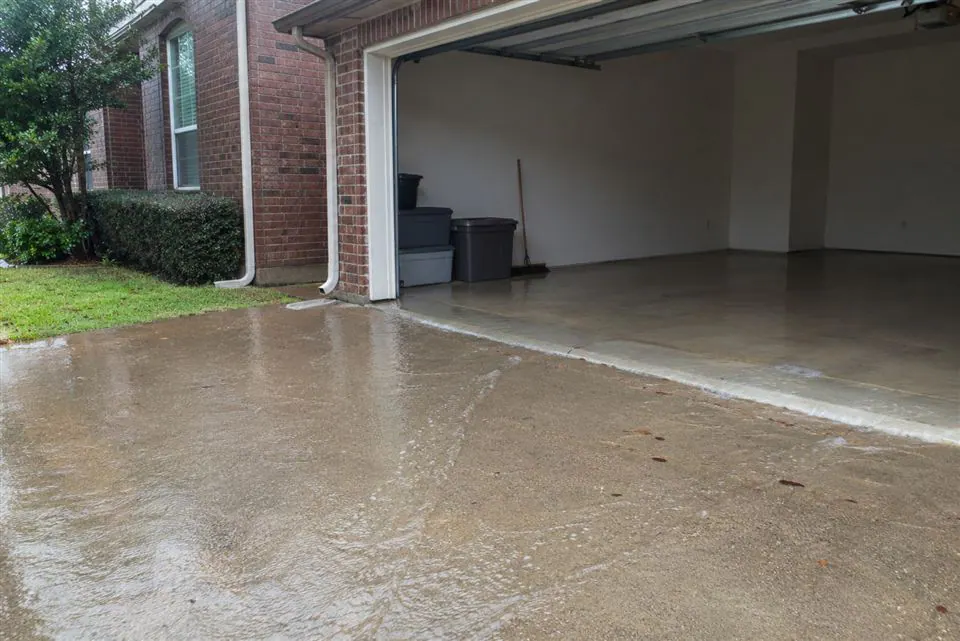
Symptom guide
Runoff crossing a driveway or sloped approach can reach the garage quickly. The flow line, channel length, grate capacity and downstream outlet all matter.
Review causes →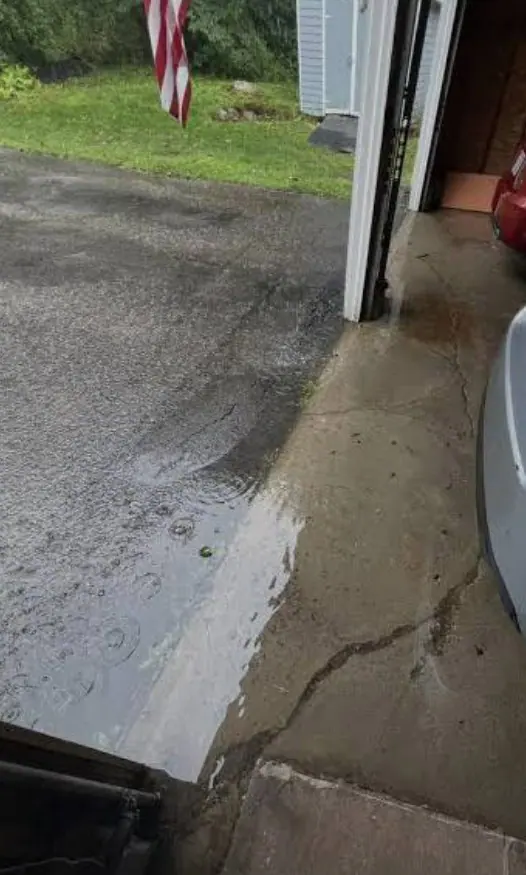
Symptom guide
A patio low point can collect its own rainfall and water arriving from adjacent grade. The solution should protect doors while keeping the finished surface usable.
Review causes →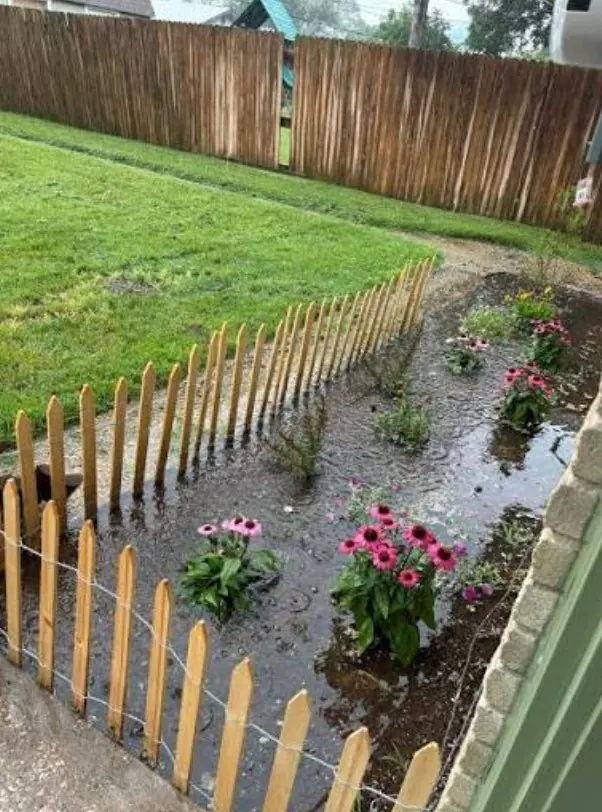
Symptom guide
Water may follow a shared low corridor or enter through fence gaps. The assessment should document the route, property constraints and a safe outlet before proposing interception.
Review causes →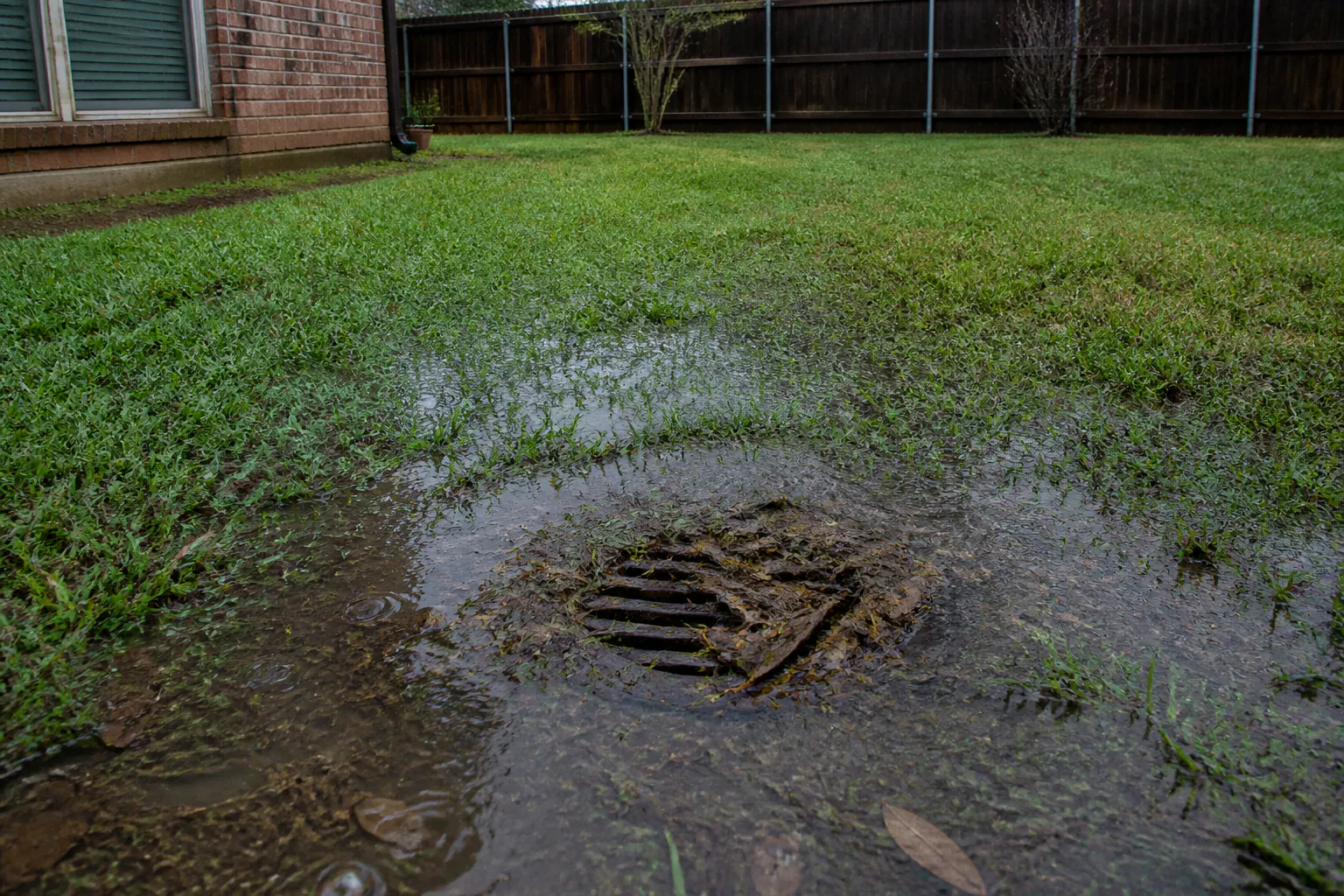
Symptom guide
Leaves and surface debris may block the grate, but recurring backups can also indicate sediment inside the line, a settled section or a buried outlet.
Review causes →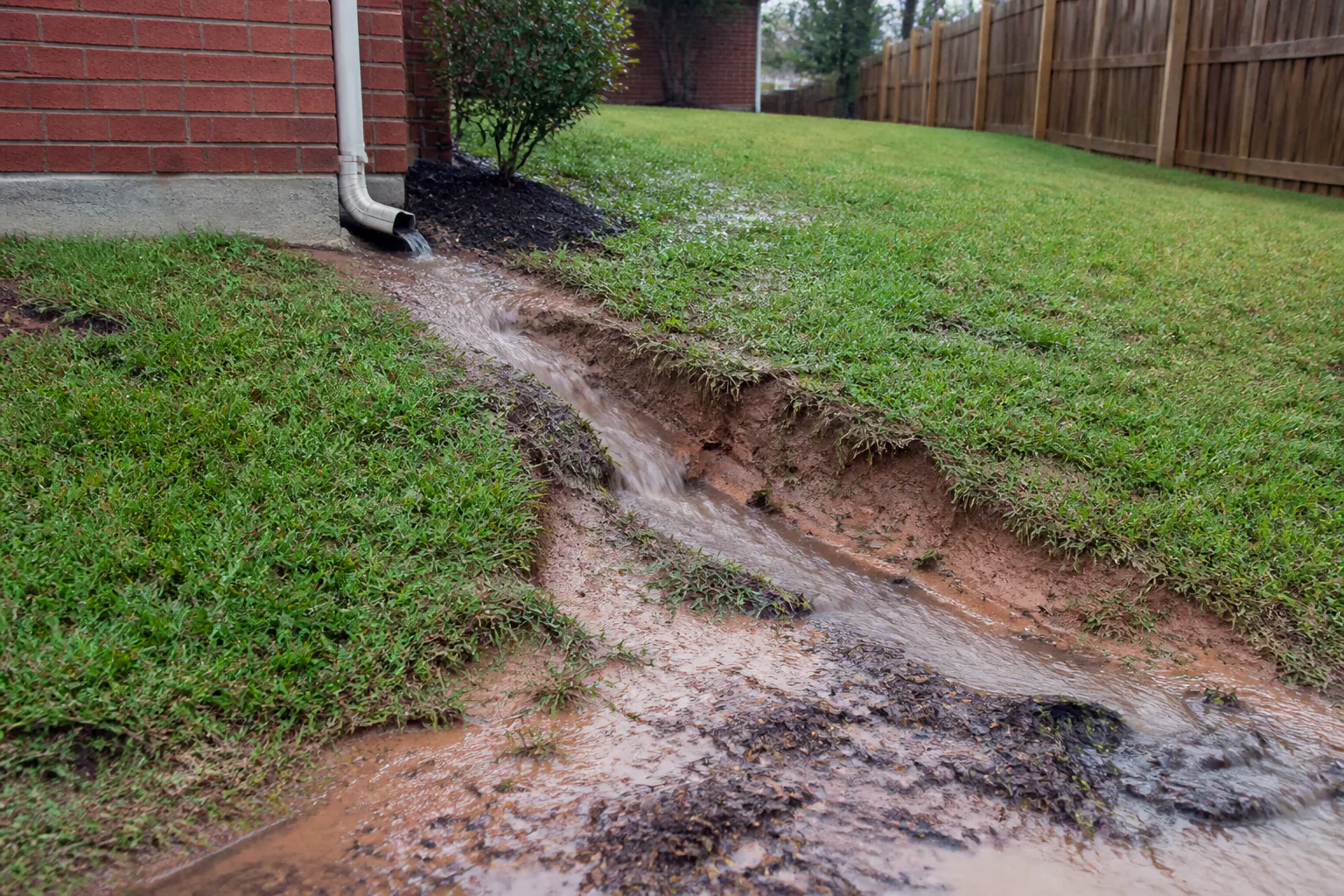
Symptom guide
Replacing lost soil without controlling the source and stabilizing the route allows the next North Texas storm to cut the same channel again.
Review causes →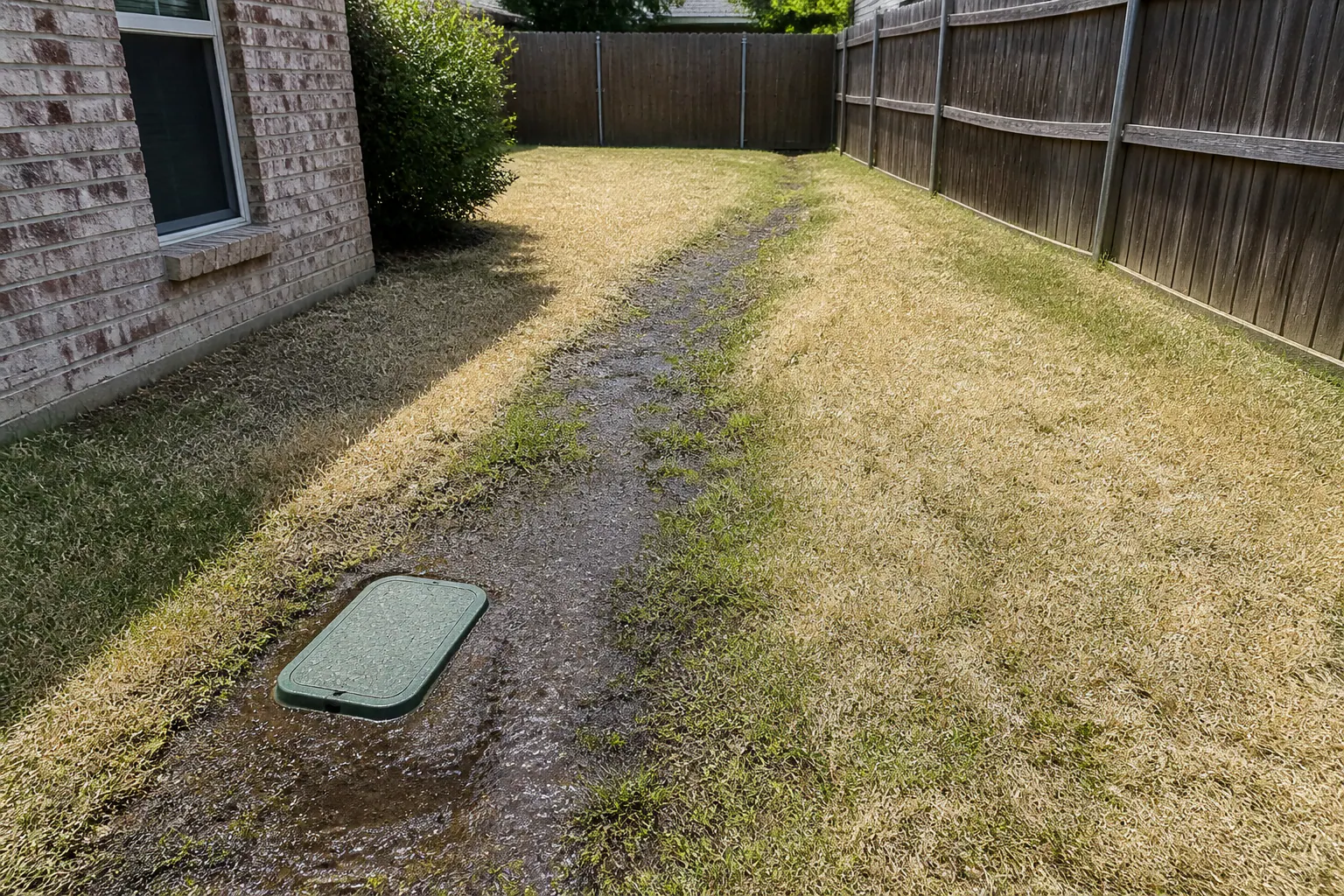
Symptom guide
Persistent moisture during dry weather may come from a leaking irrigation component, overwatering, condensation or another non-storm source. Adding a drain before identifying that source can hide the real failure.
Review causes →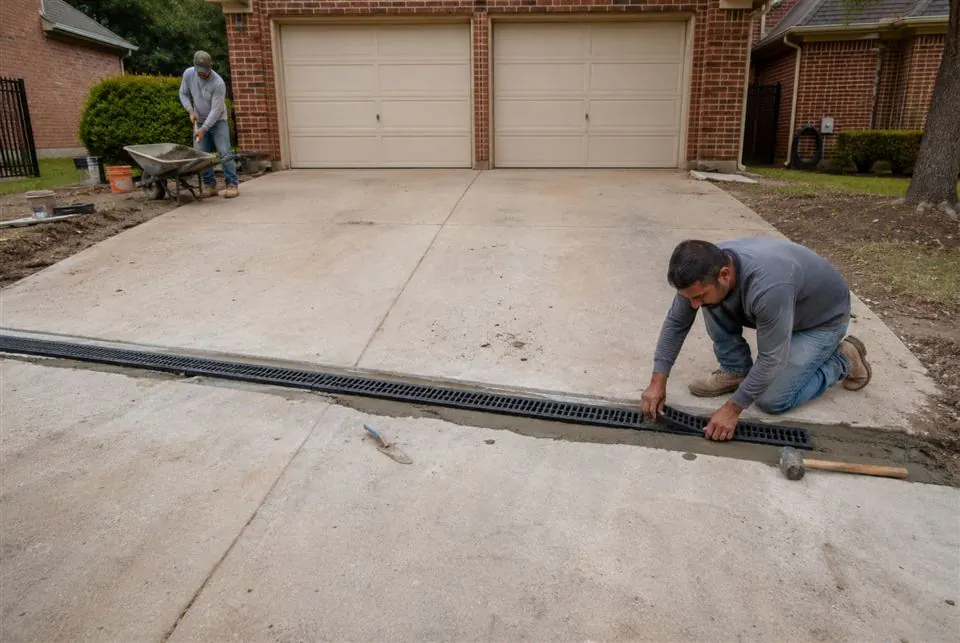
Symptom guide
Runoff moving across a driveway, pool deck or other hardscape can bypass a short drain and reach garages, doors or lower landscape areas. The flow width, surface elevation, grate, channel support and outlet must be evaluated together.
Review causes →Yard drainage problems in DFW
Water that fills a yard quickly during rain behaves differently from soil that stays soft for several days. Fast flooding may be fed by roof valleys, downspouts, neighboring grade or a large hard surface. A low spot that holds water may need direct surface collection, while a soggy or muddy yard can point to slow surface fall, saturated soil, shade, irrigation or another water source.
Water near the foundation should trigger checks of downspouts, roof valleys and finish grade before a buried system is selected. Water entering a garage usually needs interception before the threshold. A wet side yard between homes may combine roof runoff from both structures with limited space and very little usable elevation.
Fine-textured soil common across parts of Dallas–Fort Worth can remain saturated after the fastest runoff has ended. That does not mean every wet yard needs a French drain. The diagnosis still has to separate surface flow from water moving through soil and confirm that a lower, maintainable outlet exists.
Filling a depression, adding a pipe or blocking fence-line runoff without a complete route may shift water toward a patio, garage, foundation or neighboring property. Each problem page includes a “Problems this can cause” section so homeowners can understand why repeated ponding, mud, erosion and blocked access matter.
Useful assessment photos show the widest view during rain, every nearby downspout, the direction water approaches, and any existing inlet or outlet. From there, the site links the symptom to appropriate yard drainage services instead of forcing every property into the same product.
Assessment first
Photos during or immediately after rain are especially useful.