Diagnosis-led drainage
Yard Drainage Solutions
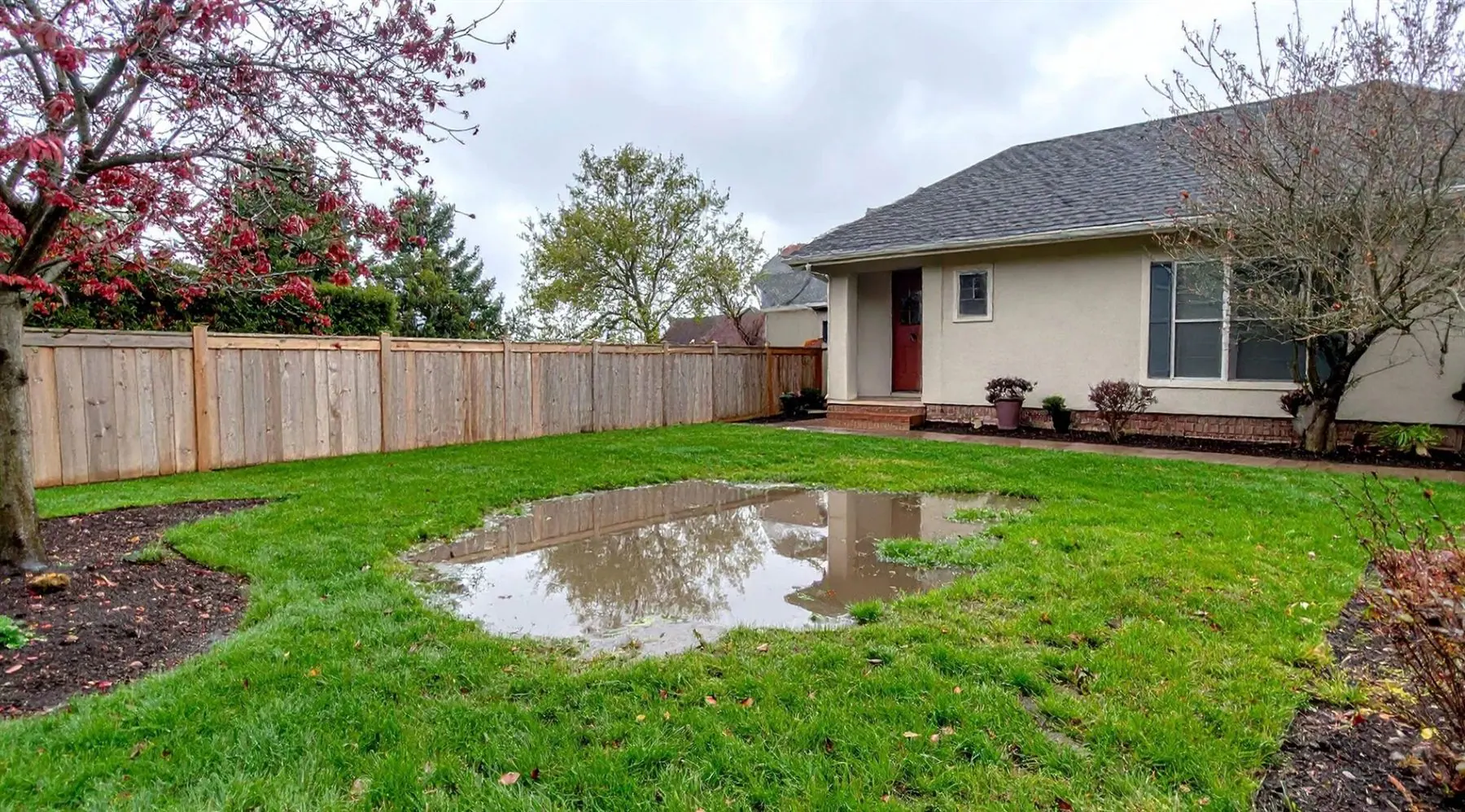
A durable yard drainage plan starts by separating roof runoff, surface flow and saturated soil before choosing an inlet, pipe or grading change.
Explore service →
Ten core services
Compare the role of each method without treating one product as the answer to every wet yard.
Service directory
Each page explains best-fit conditions, common failure patterns and when another method may be better.
Diagnosis-led drainage
A durable yard drainage plan starts by separating roof runoff, surface flow and saturated soil before choosing an inlet, pipe or grading change.
Explore service →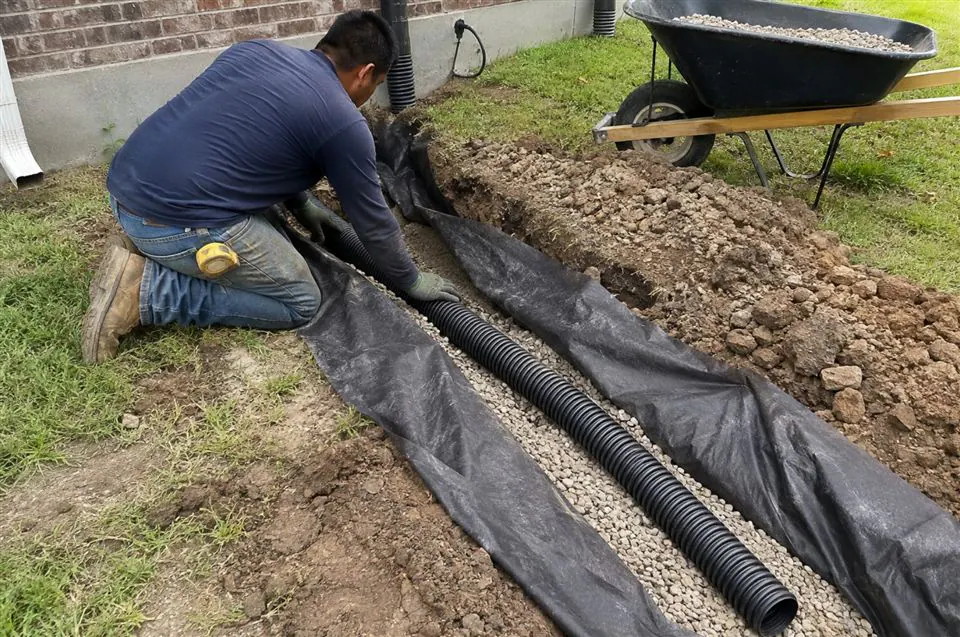
Subsurface drainage
French drain installation in Dallas requires more than perforated pipe: fabric, clean aggregate, continuous fall and a verified outlet must form one working path.
Explore service →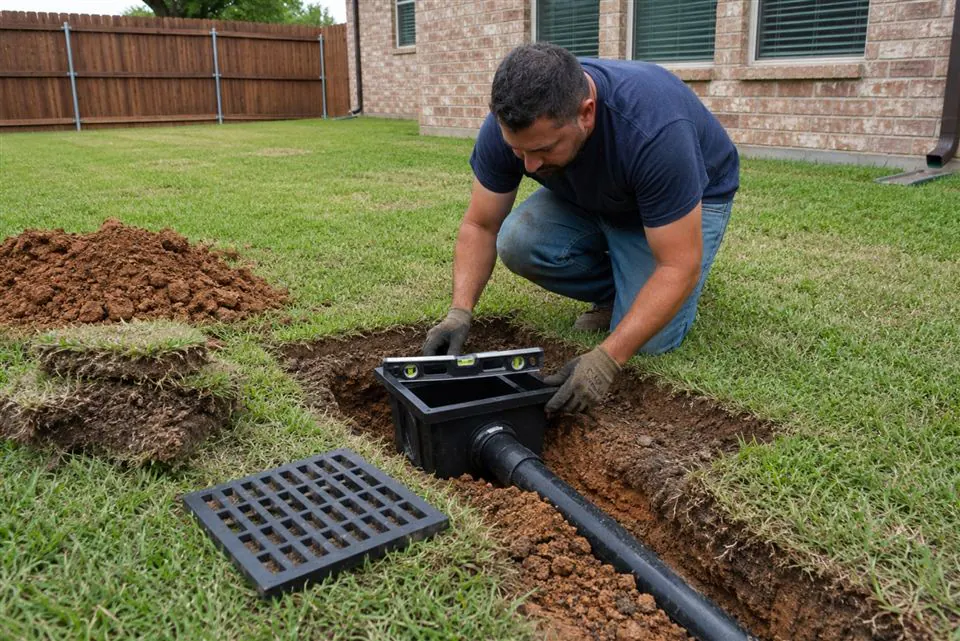
Direct surface collection
A properly located surface inlet captures runoff where it naturally concentrates, then sends it through solid pipe toward a verified outlet.
Explore service →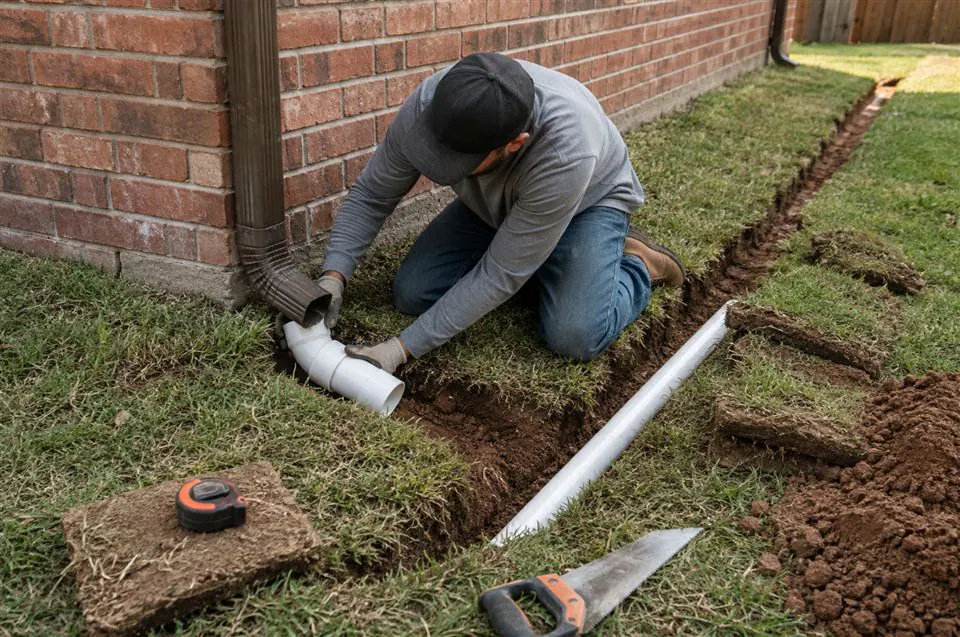
Roof runoff control
Roof water is a concentrated input. Solid conveyance pipe can carry it away from the foundation when connections, cleanouts and the discharge point remain serviceable.
Explore service →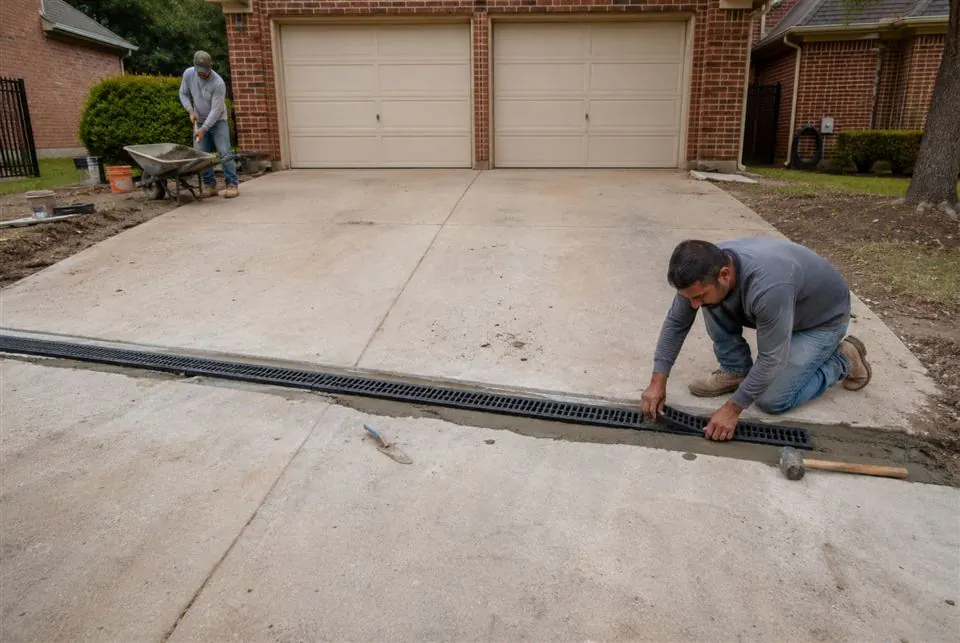
Linear surface interception
Channel drains and trench drains intercept sheet flow across Dallas driveways, pool decks, patios and thresholds, then convey it through solid pipe to a verified outlet.
Explore service →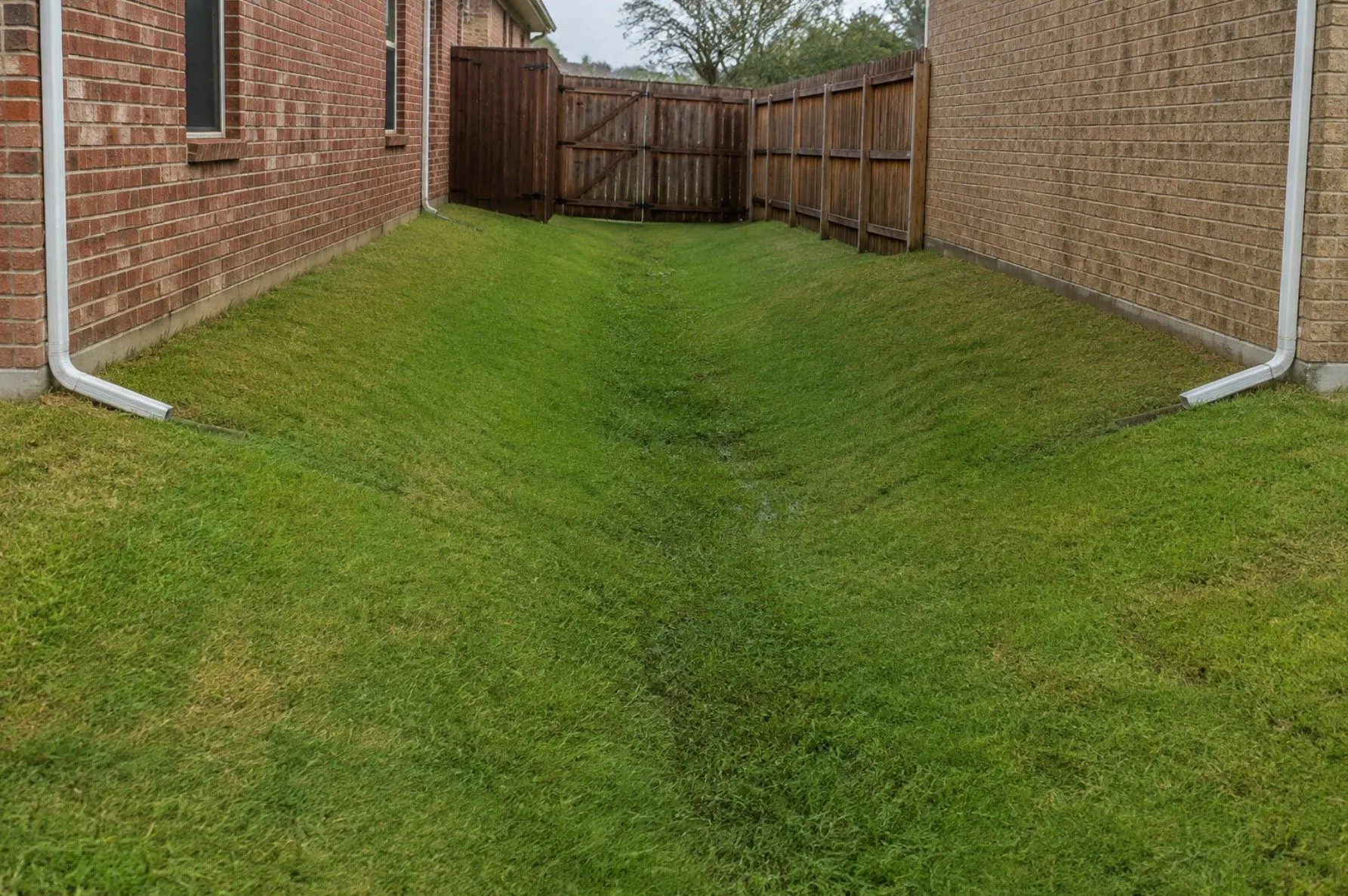
Surface flow by elevation
Sometimes the simplest durable solution is reshaping a shallow path so runoff moves across a stable surface instead of entering another buried pipe.
Explore service →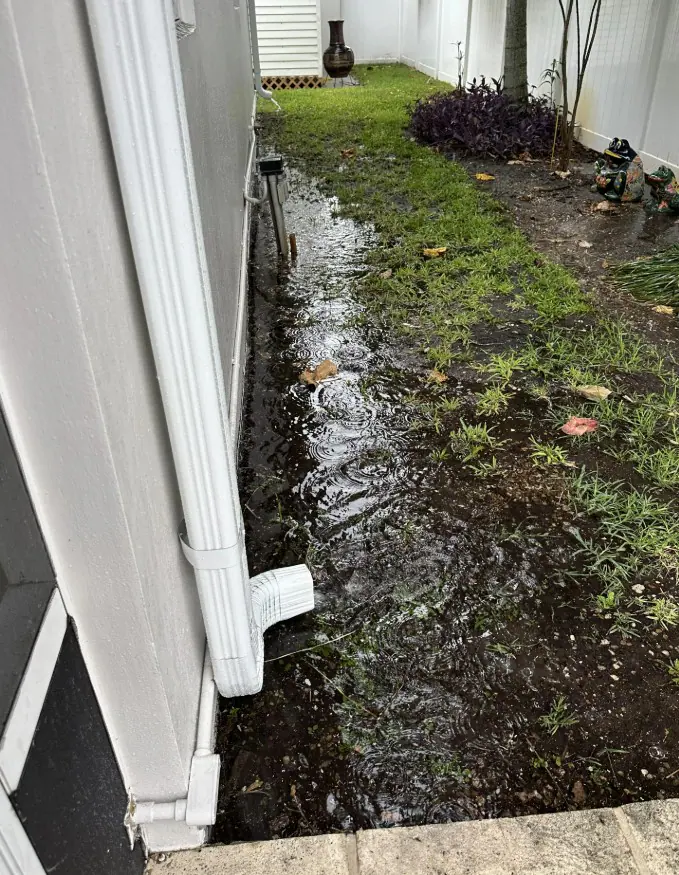
Protect the perimeter
The goal is not a generic pipe around the house. It is to control roof water, surface grade and saturated corridors that keep moisture concentrated near the foundation.
Explore service →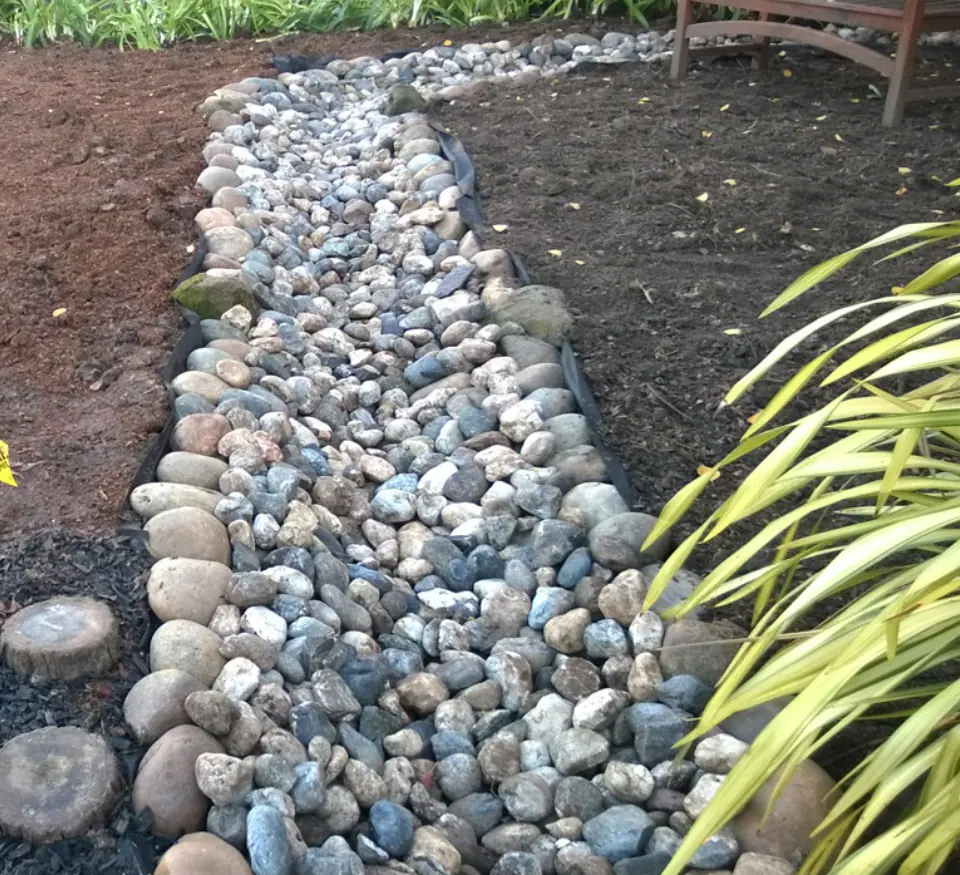
Stable surface drainage
Erosion indicates that water is moving with enough concentration or speed to carry soil. The plan should control the source and stabilize the route—not only refill the washed area.
Explore service →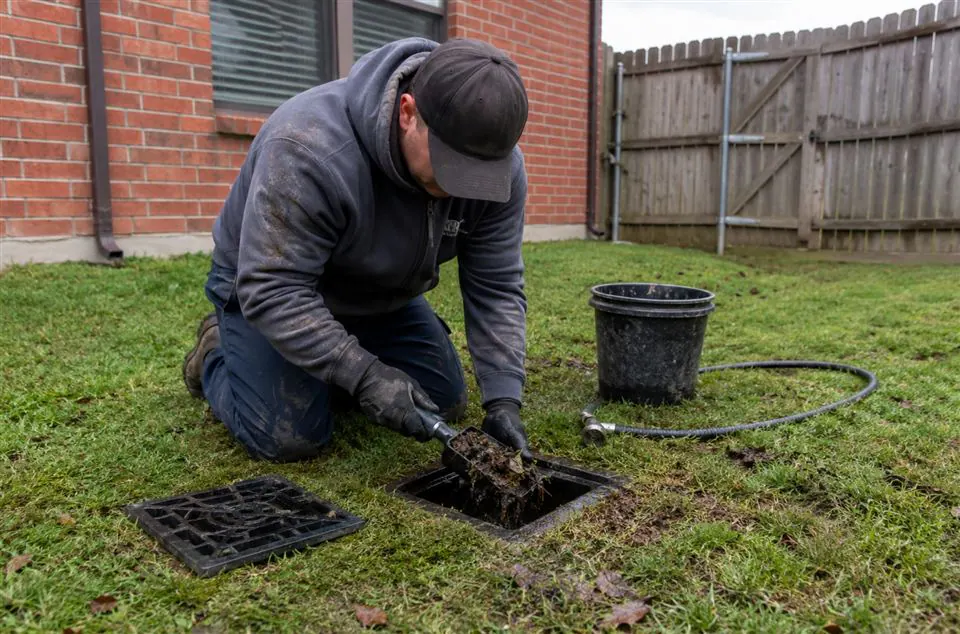
Restore existing systems
A slow or overflowing drain may have a blocked inlet, settled pipe, root intrusion, damaged fitting or buried outlet. Inspection should isolate the failure first.
Explore service →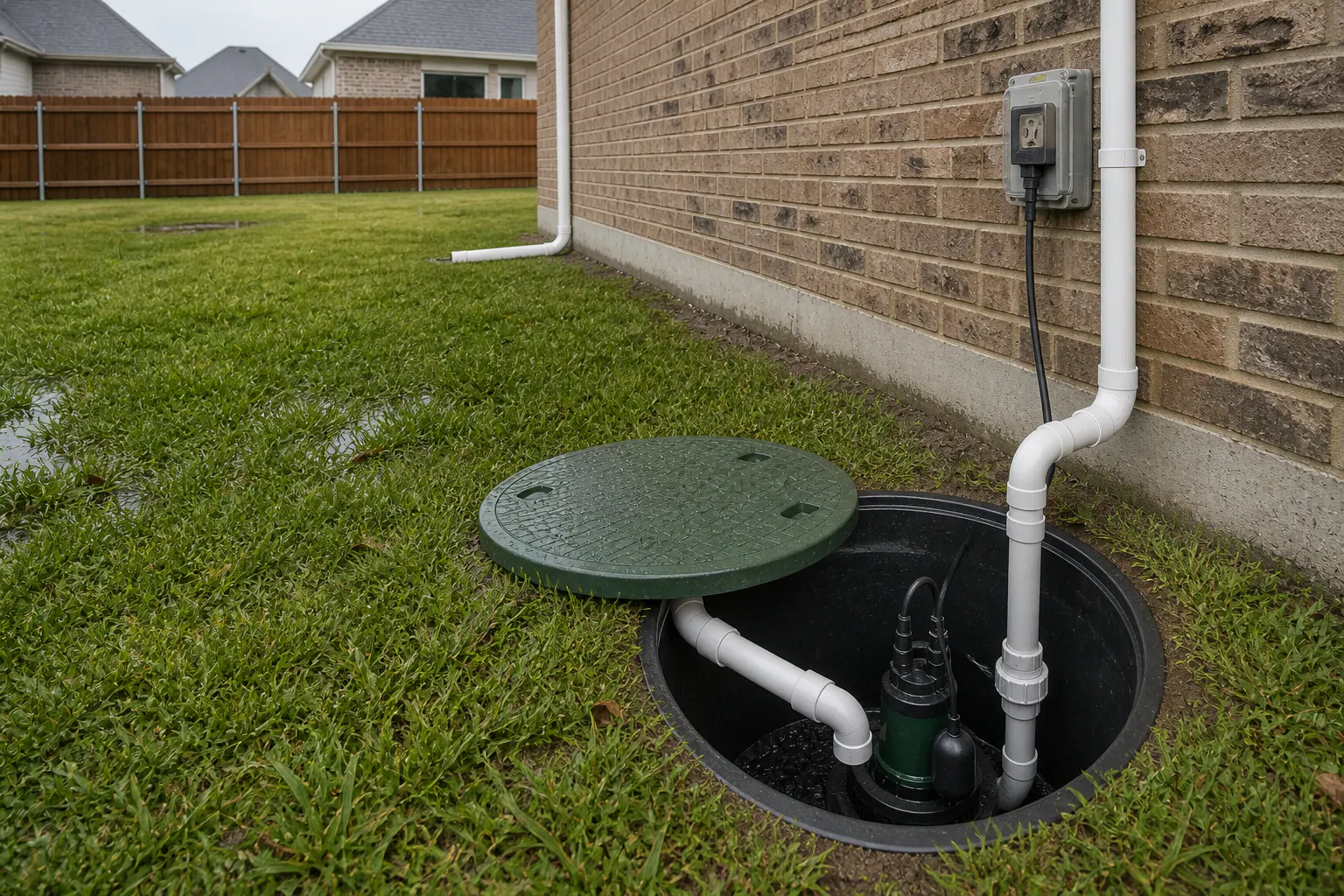
Pumped yard drainage
An outdoor sump pump collects water in a serviceable basin and lifts it through a pressure discharge line when the yard is too low for a dependable gravity outlet.
Explore service →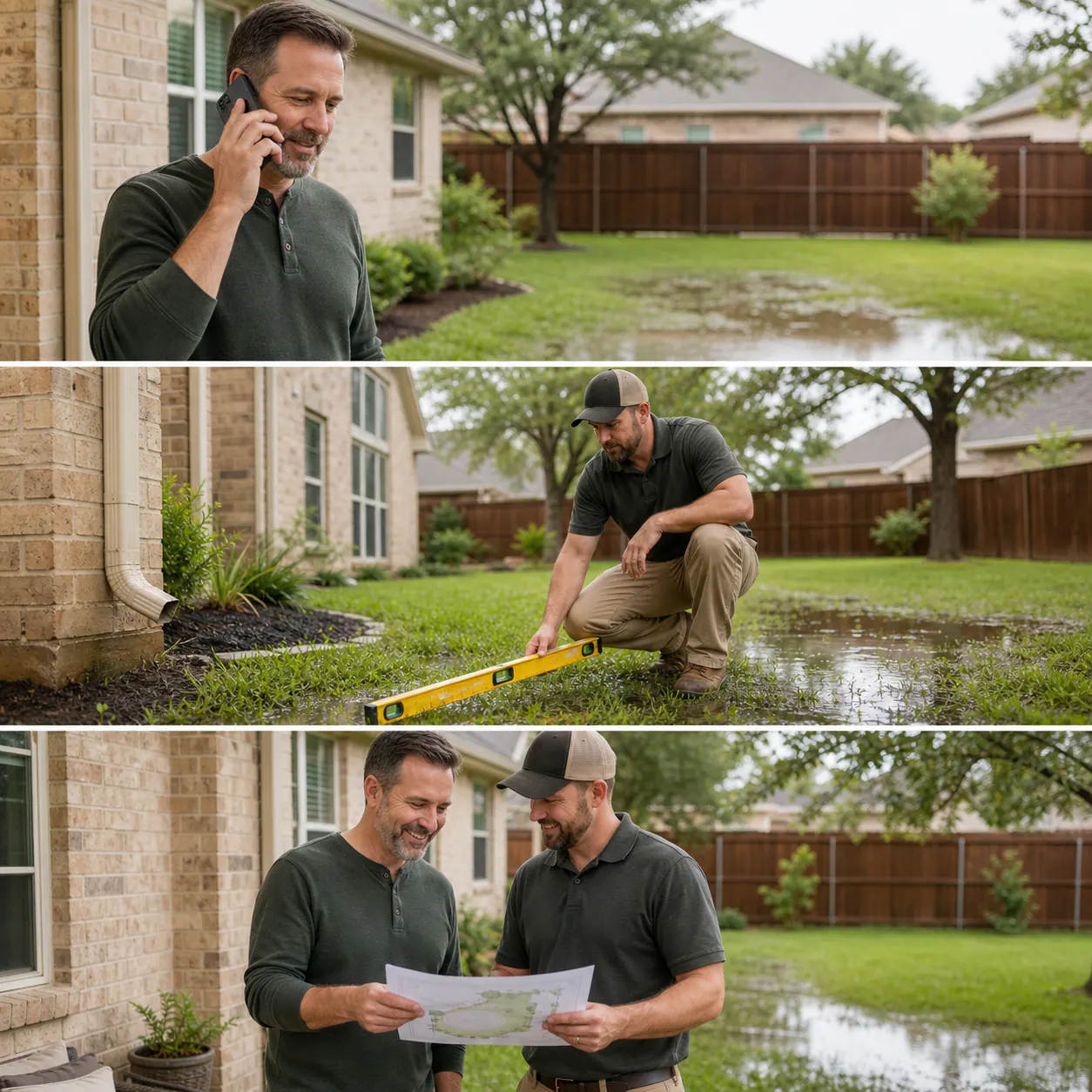
Diagnosis before estimate
A free property drainage assessment documents where water begins, how it crosses the yard and whether a practical outlet exists before a drainage estimate is prepared.
Explore service →Dallas–Fort Worth drainage services
When runoff crosses a lawn, driveway or patio, the first question is where the surface naturally sends it. A catch basin or surface drain can collect water at a true low point. A channel drain can intercept a predictable line of runoff before it reaches a garage or door. Where elevations allow, grading and a shallow swale may restore a simpler surface route without adding unnecessary buried pipe.
Downspouts release a large roof area into a small patch of soil. Underground downspout drainage uses solid pipe to convey that concentrated water away from the foundation toward a verified outlet. Treating roof water as a soil-saturation problem can add materials while leaving the highest-volume source unchanged.
A French drain is designed to collect water moving through a gravel trench in saturated soil. It is not automatically the best answer for every standing-water complaint. Fabric, clean aggregate, perforated pipe, continuous fall and the outlet must work as one assembly, especially in fine-textured North Texas soil.
An outdoor sump pump system may collect water in a serviceable basin and lift it through a pressure line. Pumping is evaluated after elevations rule out dependable gravity drainage and must include safe power, backflow control, service access and a protected discharge point.
A drain that once worked may have a blocked inlet, buried outlet, settled pipe or damaged connection. Drainage repair and cleaning begins by locating the failed component. Broad erosion or runoff may instead need erosion control, source reduction and a stable discharge transition.
The assessment connects the observed problem with a route that can be installed, maintained and discharged safely. This is why each service page explains both correct installation and common failure patterns rather than selling one system for every yard.
Assessment first
Photos during or immediately after rain are especially useful.