2026 Dallas–Fort Worth price guide
How Much Does Yard Drainage Cost in Dallas–Fort Worth?
This guide separates current retail material prices from realistic installed ranges for French drains, catch basins, underground pipe, channel drains, grading and outdoor sump pumps.
Prices researched and checked September 3, 2026. Store pricing, stock, tax and delivery can change.
Quick DFW budget answer
A typical single-system yard drainage project often lands between $2,000 and $7,500.
These are planning ranges, not flat-price offers. A 40-foot project can cost more than a 100-foot project if it crosses concrete, needs deep excavation or has no practical gravity outlet. A reliable estimate identifies the source, collection point, route and final discharge.
Installed drainage prices
What different yard drainage systems cost in Dallas–Fort Worth
Local contractor ranges and Dallas cost datasets do not use identical scopes. These broad planning ranges help compare systems before property measurements.
| Drainage work | 2026 DFW planning range | What the range assumes |
|---|---|---|
| Targeted repair or short correction | $500–$2,000 | Accessible inlet, fitting, outlet or short damaged section. |
| Catch basin tied to a usable nearby line | $350–$900 each | Basin, grate, excavation, connection and restoration. |
| Catch basin plus new solid-pipe route | $1,000–$3,500+ | One or more inlets, pipe, fittings, fall and outlet. |
| Solid yard drain / downspout line | $20–$45 per ft | Excludes major concrete and unusual outlet work. |
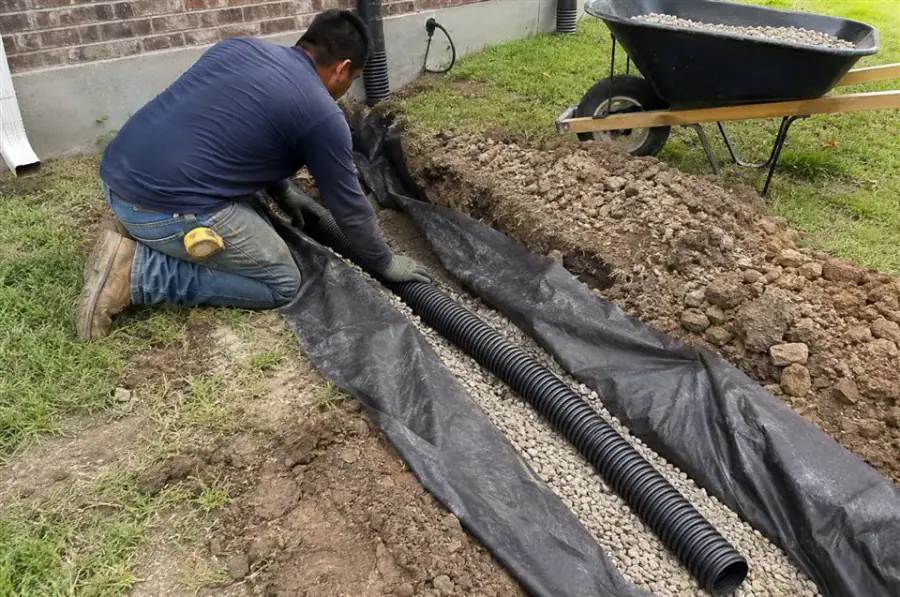
| French drain | $30–$75 per ft | Fabric, washed aggregate, perforated pipe, outlet and restoration. |
| Driveway or patio channel drain | $60–$150 per ft | Channel, grate, concrete, connection and discharge route. |
| Yard grading or drainage swale | $1,000–$5,000+ | Area, soil, access, irrigation, erosion control and turf. |
| Dry creek / stabilized erosion route | $1,500–$5,000+ | Excavation, fabric, stone, transitions and access. |
| Outdoor sump pump system | $1,500–$5,000+ | Basin, pump, controls, power and pressure discharge. |
| Multi-zone whole-property plan | $5,000–$15,000+ | Several sources, long routes, hardscape, pumping or major restoration. |
Ranges do not include every permit, electrical, curb, concrete, irrigation, utility, haul-off or restoration condition.
French drain cost
Why French drain pricing is quoted per linear foot
A French drain collects water moving through saturated soil. In DFW, a reasonable early budget is $30–$75 per installed foot. It should include excavation, nonwoven geotextile, clean washed angular aggregate, perforated pipe, connections, positive fall, a verified outlet and basic restoration.
A shallow trench with open access is different from a deep side-yard trench beside utilities, roots, fences and equipment. If water travels over the lawn or arrives from a downspout, a surface inlet or solid pipe may be more direct than a French drain.
- 50 feet: $1,500–$3,750 installed
- 100 feet: $3,000–$7,500 installed
- 200 feet: $6,000–$15,000 installed
Catch basin cost
A basin is inexpensive at the store; a working route is more than one basin
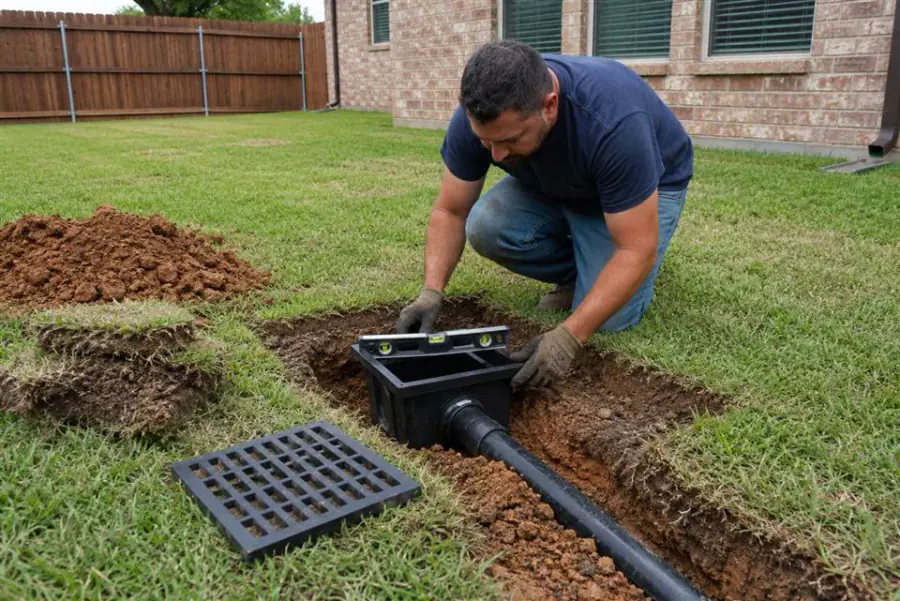
Current retail examples put a 9-inch or 12-inch plastic catch-basin kit around $33–$93. A larger 18-inch kit can be around $321. Those prices exclude excavation, connection, buried pipe, fall, discharge protection and restoration.
A basin connected to a verified nearby line may plan around $350–$900 installed. When it needs a new solid-pipe route, a more useful budget is $1,000–$3,500 or more. It should sit at the true low point where water naturally concentrates.
Solid pipe and downspout cost
Underground pipe carries captured water; it does not replace collection or an outlet
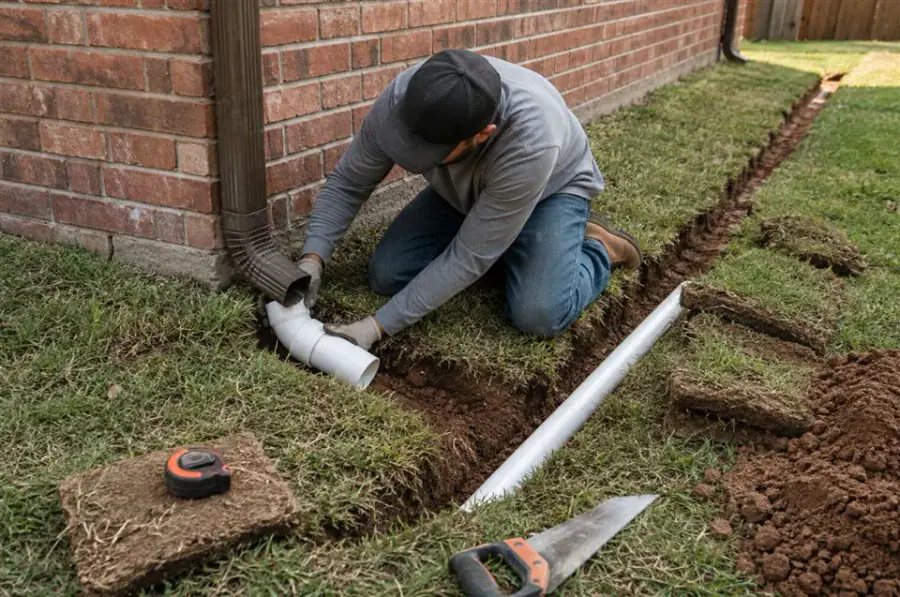
A 100-foot coil of 4-inch solid corrugated pipe was approximately $109–$154 at current retail listings. Ten-foot lengths of 4-inch SDR-35 rigid PVC were roughly $16–$20 each. A buried solid line commonly plans at $20–$45 per installed foot because layout and labor dominate the finished system.
A short underground downspout extension may cost $400–$800. Longer routes, multiple downspouts, cleanouts, fittings and protected discharge can reach $800–$1,500 per downspout or more. Solid pipe contains concentrated roof water instead of releasing it into wet soil.
Channel and trench drain cost
A driveway drain includes concrete work, a load-rated grate and an outlet
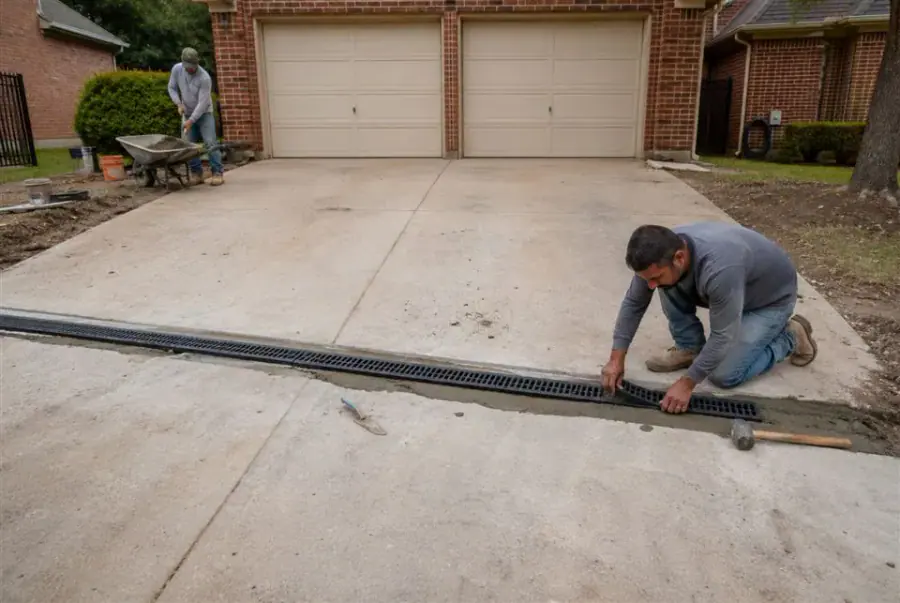
A current 10-foot NDS channel with galvanized grate was listed around $239 at Lowe’s. Installed residential channel-drain budgets are roughly $60–$150 per foot, with a 10-foot crossing often totaling $800–$3,000.
Concrete cutting, demolition, forming, grate load rating, outlet fittings, buried discharge pipe and restoration explain the difference. A channel without adequate pipe capacity or a lower outlet can move the backup instead of solving it.
Grading, swales and pumps
Some yards need a surface route; others need water lifted to an outlet
Yard grading or a drainage swale often plans around $1,000–$5,000 or more. Price depends on reshaped area, soil volume, equipment access, irrigation, tree protection, erosion control and turf restoration. A swale still needs a stable destination; moving soil without a route can shift water toward a slab or neighbor.
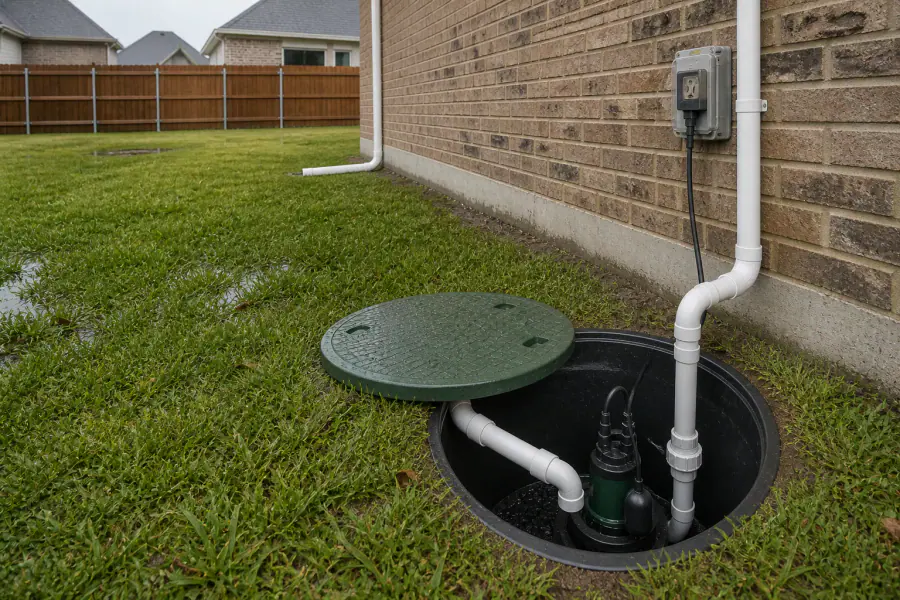
An outdoor sump pump system commonly plans around $1,500–$5,000 or more. Retail 1/2-horsepower pumps may cost only $125–$325, but a complete outdoor system needs a basin, stable base, check valve, union, outdoor-rated controls, safe electrical work, pressure discharge and protected outlet. Pumps add maintenance and outage risk, so gravity should be evaluated first.
Retail material prices
What common drainage parts cost before labor
Prices were checked online on September 3, 2026. They are reference points, not guaranteed Dallas store quotes; availability, brand, tax, bulk discounts, delivery and handling change the total.
| Retail component | Typical size | Observed price | Role in the system |
|---|---|---|---|
| 4-in. perforated corrugated pipe | 100-ft coil | $94–$110 | Collects subsurface water in a correctly built aggregate trench. |
| 4-in. solid corrugated pipe | 100-ft coil | $109–$154 | Conveys captured roof or surface water without accepting soil water. |
| 4-in. SDR-35 rigid PVC | 10-ft section | $16–$20 | Smoother, more rigid conveyance; fittings and freight vary. |
| 9-in. catch-basin kit | basin, grate, adapters | $33–$66 | Small surface collection point; capacity must match runoff. |
| 12-in. catch-basin kit | basin, grate, adapters | $44–$93 | Larger collection area; metal grates cost more. |
| 18-in. catch-basin kit | basin and grate | about $321 | Larger inlet for higher flow or debris volume. |
| Pop-up drainage emitter | 3-in. or 4-in. | $16–$29 | Terminal fitting that needs usable fall and a safe release area. |
| Nonwoven geotextile | 4 ft × 100 ft roll | $53–$149 | Separates fine soil from clean aggregate. |
| Channel drain with galvanized grate | 10 ft × about 5¾ in. | about $239 | Retail channel only; installation and outlet are separate. |
| 1/2-HP sump pump | pump only | $125–$325 | Also needs basin, controls, check valve, power and discharge. |
| Washed angular drain rock | bulk ton or cubic yard | $35–$80+ before delivery | Quantity depends on trench width and depth. |
| Adapters, wyes, elbows and cleanouts | each | $5–$40+ | Long routes need multiple fittings; larger sizes cost more. |
Important: the correct component is selected by flow, debris, trench, traffic, outlet and service needs—not the lowest shelf price. Totals exclude waste, tools, equipment, spoil removal and restoration.
100- and 200-foot examples
What 100 feet or 200 feet of drainage pipe can cost
These scenarios show why pipe price and drainage-system price are different. They are budgeting examples, not property quotes.
Solid 4-inch route
Retail materials: about $350–$1,200 for pipe, one or two inlets or adapters, fittings, cleanout or emitter, bedding and basic restoration supplies.
Installed: about $2,000–$4,500 where access and outlet are workable.
Solid 4-inch route
Retail materials: about $700–$2,000 after a second coil, more fittings, collection points, delivery and restoration supplies.
Installed: about $4,000–$9,000, with extra depth or hardscape potentially higher.
French drain trench
Retail materials: about $600–$1,800 for perforated pipe, fabric, fittings and several cubic yards of washed angular aggregate, plus delivery.
Installed: about $3,000–$7,500.
French drain trench
Retail materials: about $1,200–$3,500, depending heavily on trench cross-section, aggregate volume and access.
Installed: about $6,000–$15,000.
Example math is not a design
A 12-inch-wide by 18-inch-deep trench uses a different quantity of aggregate than a narrower or shallower trench. Depth can change along the route to preserve fall. Final quantity must come from measured dimensions, not a generic 100-foot example.
Pipe type and diameter
Is 3-inch, 4-inch or 6-inch drainage pipe appropriate?
Four-inch pipe is common in residential yard drainage because fittings, basins and downspout adapters are widely available. That does not make it correct for every roof, driveway or combined inlet system.
Three-inch pipe may appear on short, limited downspout routes or low-profile components, but offers less tolerance for high flow, debris and multiple sources. Six-inch pipe can be considered when several inlets combine or the contributing area is large; it also needs a wider trench, larger fittings and more excavation.
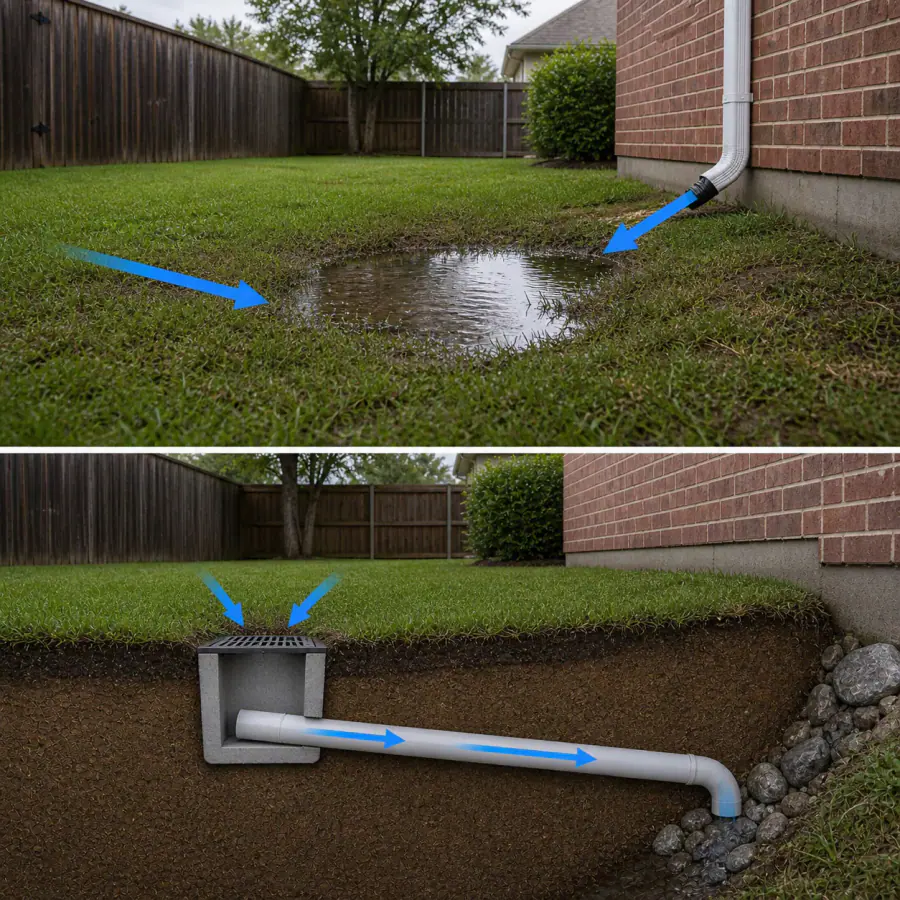
Perforated pipe collects water through a gravel trench. Solid pipe conveys already-collected surface or roof water. Corrugated pipe is flexible and economical; rigid sewer-and-drain pipe can provide a smoother, stable route when correctly bedded. Diameter and material should follow drainage area, slope, debris and maintenance calculations.
What changes the estimate
Ten reasons two DFW drainage quotes can be thousands apart
The lowest line-item price is not necessarily the lowest complete cost if outlet, haul-off or restoration appears later.
- Water sourceRoof runoff, surface flow, saturated soil and failed drains need different systems.
- Available fallA gravity line needs a lower, serviceable outlet.
- Length and depthLonger, deeper trenches increase excavation and restoration.
- Pipe diameterLarger pipe and fittings require more space and material.
- Collection pointsEach basin, cleanout and connection adds work.
- AccessNarrow gates and side yards can prevent normal equipment use.
- Utilities and rootsConflicts change routes or require careful hand excavation.
- ConcreteCutting, removal, forming and replacement can dominate a short route.
- OutletEmitters, erosion protection, curb work or pumping have different scopes.
- RestorationSod, beds, irrigation, fences and cleanup should be defined.
Dallas–Fort Worth conditions
DFW rain, clay and flat lots affect labor—but they do not select the product
Dallas–Fort Worth receives roughly 37 inches of precipitation in a normal year, with thunderstorms capable of intense runoff. Fine-textured North Texas soils may accept water slowly and stay soft after surface flow ends. Many properties also have narrow side yards, fence-line grade changes, concentrated roof valleys and little elevation between a backyard low point and the street.
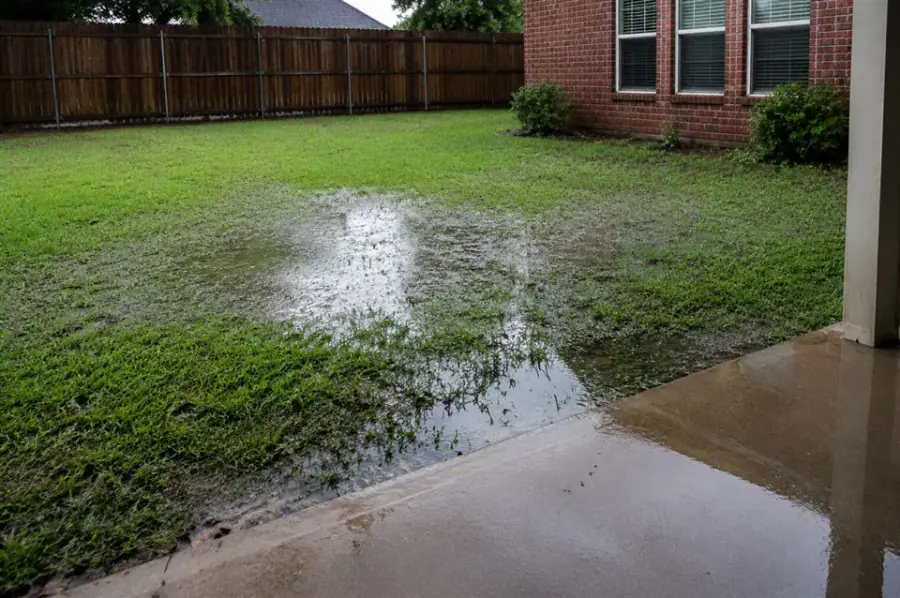
Clay alone does not prove that a French drain is needed. A yard that floods during rain may need surface collection; a wet strip that remains for days may need subsurface collection; a roof source should usually be contained in solid pipe. A usable outlet remains the controlling question for every option.
DIY versus professional installation
When buying parts yourself saves money—and where mistakes become expensive
A homeowner can compare component prices and complete limited surface work, but elevation, underground conflicts and a stable outlet are usually the difficult part.
DIY may be reasonable when
- The route is short, open and visibly lower from start to finish.
- No concrete, retaining structure or electrical work is involved.
- The discharge location is confirmed and will not harm another area.
- The homeowner can calculate fall, quantities and restoration.
- Utility locations and private lines are understood before excavation.
Professional assessment is valuable when
- Water approaches a foundation, garage or another structure.
- The yard appears flat or outlet elevation is uncertain.
- Several roofs, yards or hard surfaces feed the same low area.
- The route crosses utilities, roots, irrigation, concrete or tight access.
- A pump, curb outlet, large pipe or multi-zone system is considered.
Before digging in Texas: contact Texas 811 at least two business days before excavation. The public locate is free, but privately owned lines may require separate locating.
Compare proposals
What a useful yard drainage estimate should show
A number is easier to trust when the scope explains how the entire route works.
Observed source, contributing area and symptom the work is intended to correct.
Inlet, downspout connection, trench or grading location and why it fits.
Pipe type, diameter, approximate length, fall, cleanouts and fittings.
Where water ends and how the transition remains protected and serviceable.
Excavation, spoil handling, utilities, access, concrete and exclusions.
Backfill, compaction, sod, beds, irrigation repair, cleanup and warranty limits.
Research and price-check sources
Where these 2026 drainage cost ranges came from
This guide uses current retail listings, Dallas-area cost data, published North Texas contractor ranges, official utility-safety guidance and regional climate context. We use ranges because no public source can see a property’s elevations or outlet.
- Home Depot — 4-inch solid drainage pipe
- Home Depot — 4-inch perforated drainage pipe
- Home Depot — 4-inch SDR-35 pipe
- Home Depot — NDS catch basins
- Home Depot — pop-up drainage emitter
- Lowe’s — 10-foot NDS channel drain
- Angi — Dallas landscape drainage cost data
- Texas 811 — contact before digging
- National Weather Service — DFW climate
External sources support homeowner research and do not imply endorsement of Texas Yard Drainage. Prices can change; confirm local stock and an actual property scope.
Dallas drainage cost FAQ
Common questions about yard drainage pricing
Answers are for early planning. Final pricing requires property measurements, utilities, access and a verified outlet.
How much does yard drainage cost in Dallas–Fort Worth?
A small targeted repair or short drainage route may cost about $500–$2,000. Many single-system residential projects fall around $2,000–$7,500. Complex multi-zone, pumped, deep, heavily restored or hardscape projects can reach $7,500–$15,000 or more.
How much does a French drain cost per foot in Dallas?
A practical DFW planning range is about $30–$75 per linear foot installed. Deeper excavation, roots, utilities, narrow access, large aggregate quantities and difficult restoration move the price upward.
How much would a 100-foot French drain cost?
At roughly $30–$75 per installed foot, a 100-foot French drain is commonly budgeted at about $3,000–$7,500. A quote should identify trench dimensions, fabric, washed aggregate, perforated pipe, fall, outlet and restoration.
How much would a 200-foot French drain cost?
A 200-foot French drain may plan around $6,000–$15,000, but extra depth, spoil removal, delivery access, cleanouts, utilities, trees, outlet work and restoration can materially change the total.
What does one catch basin cost?
A retail 9-inch or 12-inch plastic catch-basin kit was roughly $33–$93 when checked. A professionally installed basin connected to a usable nearby line may plan around $350–$900. A new basin plus a long buried solid-pipe route can become a $1,000–$3,500 or larger system.
How much does underground downspout drainage cost?
A short, accessible downspout connection may start around $400–$800. Longer routes, multiple downspouts, cleanouts, outlet protection and restoration can bring the project to $800–$1,500 per downspout or about $20–$45 per linear foot.
How much does a driveway trench drain cost?
A residential channel or trench drain often plans around $60–$150 per installed foot. A 10-foot crossing may total about $800–$3,000 after the channel, load-rated grate, concrete work, outlet pipe and restoration are included.
How much does an outdoor sump pump system cost?
A complete outdoor drainage sump system commonly plans around $1,500–$5,000 or more. The pump may be only $125–$325 at retail; the basin, controls, power, discharge pipe, excavation and protected outlet make up the rest.
Why is installed drainage more expensive than the pipe?
Installed cost includes diagnosis, elevation layout, utility coordination, excavation, soil and aggregate handling, fittings, bedding, connections, continuous fall, outlet construction, flow testing, cleanup and restoration.
Can I price a drainage project from linear feet alone?
Linear feet are useful for an early budget, but not a final scope. Two 100-foot routes can differ because of depth, pipe type and diameter, inlets, utilities, access, roots, concrete, outlet elevation and restoration.
Need a property-specific direction?
See how Texas Yard Drainage evaluates the source, route and outlet.
Review the service process, system options and information that helps prepare a realistic Dallas–Fort Worth drainage scope.
Explore Yard Drainage Solutions