Trace the input
Trace the complete sheet-flow width across the hard surface.
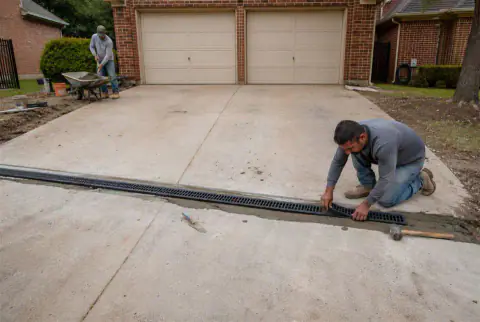
Linear surface interception
Channel drains and trench drains intercept sheet flow across Dallas driveways, pool decks, patios and thresholds, then convey it through solid pipe to a verified outlet.
See the difference first
Before reading the technical details, compare the complete route with the shortcut that commonly fails.
Request This Assessment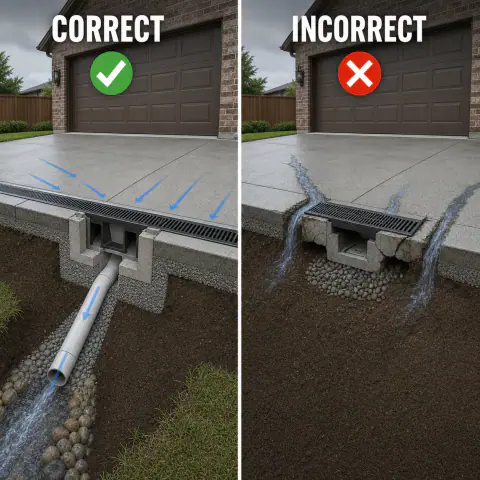
Set the grate along the full runoff path, support the channel for the expected load and connect it to a pipe and outlet sized for the contributing area.
A short or high channel lets water bypass the ends; poor bedding can allow settlement, cracked edges and standing water in the trough.
Generated educational comparison. It explains an installation principle and is not presented as a completed Texas Yard Drainage project.
Driveways, patio edges and hardscape transitions where runoff crosses a predictable line.
A lawn problem with no hard edge, no structural support for the channel or no workable discharge route.
Where can the water go with continuous fall, safe discharge and practical maintenance access?
What this service means
A channel drain is a long grate that catches sheet flow before it reaches a garage, patio door, pool deck edge or another hardscape threshold. A short section cannot help if water can simply run around the ends. In residential searches, channel drain and trench drain usually describe the same linear collection idea.
Channel length, grate intake, load class, concrete bedding, invert elevation, outlet connection and downstream capacity determine whether the linear drain can intercept and convey the design flow.
How the work is planned
The materials are selected after the water source and physical route are understood.
Trace the complete sheet-flow width across the hard surface.
Select channel and grate strength for pedestrian or vehicle loading.
Set the channel below the approach flow line and support it with the required bedding.
Connect a solid outlet line and preserve removable-grate cleaning access.
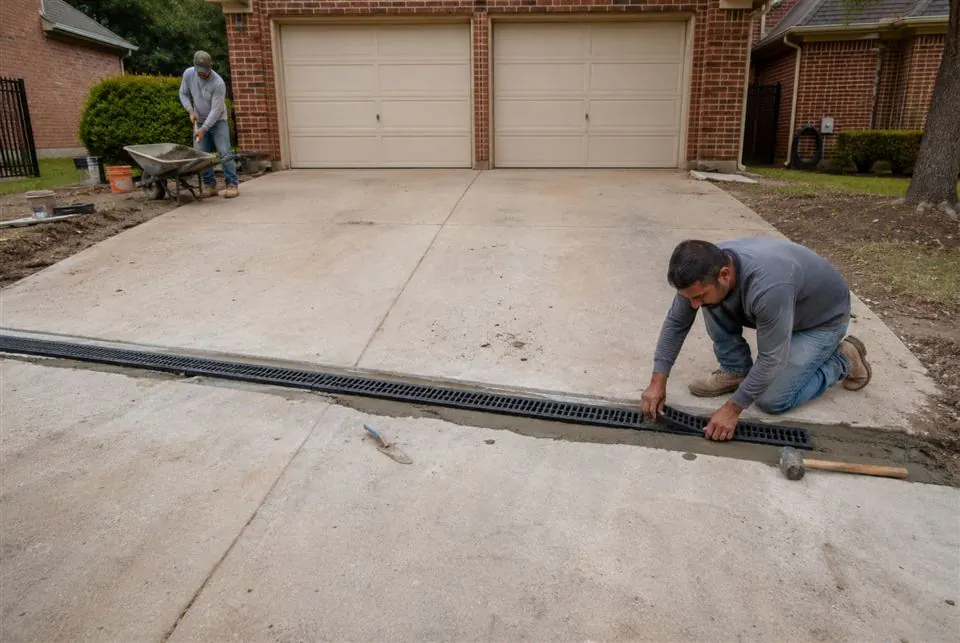
Channel & Trench Drains in North Texas
Driveway approaches can shed water quickly during short intense rain. Expansive soil movement and vehicle loads make stable bedding and correct concrete integration as important as grate size. For trench drains in Dallas, TX, the proposal should state the channel model, trench drain grate material, load guidance, concrete support, outlet connection and downstream route.
Collection alone does not remove water. Gravity systems require a continuously lower, maintainable discharge point. Pumped systems require a protected pressure discharge and safe service access. In both cases, the destination must be confirmed before installation.
A useful scope identifies the input, collection point, material type, pipe or surface route, access constraints, outlet protection and restoration. It should also explain why this method fits better than the common alternatives.
Decision guide
| Observed condition | Direction to evaluate | Reason |
|---|---|---|
| Water arrives mainly from a downspout | Underground downspout drainage or source control | Keep concentrated roof water in a solid conveyance route. |
| Water collects at one visible low point | Surface inlet or limited regrading | Capture the water where it actually concentrates. |
| Broad runoff follows a shallow path | Grading or a swale | A stable surface route may be simpler than another buried pipe. |
| An existing drain once worked | Inspection, cleaning or repair | Locate the failed component before replacing the system. |
| No gravity outlet is physically available | Outdoor sump pump system | Collect water in a serviceable basin and pump it to a protected outlet only after elevations rule out gravity. |
Local drainage guidance
Use the city guide for local drainage context, then return to this central service page for system design, correct installation and failure patterns.
Each city guide combines the regional drainage method with verified local context, common property conditions and direct links to the relevant problem and service pages.
Channel & Trench Drains FAQ
These answers are general. Final recommendations depend on the property, elevations, utilities and outlet.
It must span the actual flow path with enough end coverage that water cannot simply go around it.
The channel, grate, bedding and surrounding concrete must match the expected load class.
Capacity depends on slope, contributing area, grate intake, pipe and outlet—not width alone.
Removable grates and reachable downstream access make debris removal practical.
Assessment first
Photos during or immediately after rain are especially useful.