Trace the input
Map roof valleys, downspouts and surface elevations along the wet perimeter.
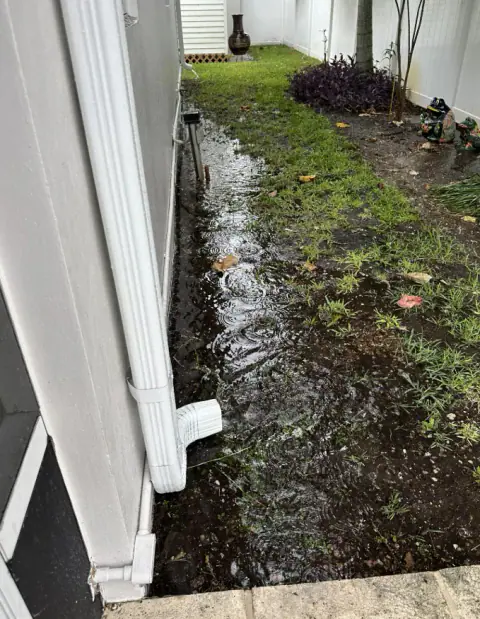
Protect the perimeter
The goal is not a generic pipe around the house. It is to control roof water, surface grade and saturated corridors that keep moisture concentrated near the foundation.
See the difference first
Before reading the technical details, compare the complete route with the shortcut that commonly fails.
Request This Assessment
Separate each water input, maintain safe finish grade, keep roof discharge controlled and route collected water to a verified outlet.
A drain placed beside the slab without correcting downspouts or reverse grade can mask the source while leaving the highest-volume input unchanged.
Generated educational comparison. It explains an installation principle and is not presented as a completed Texas Yard Drainage project.
Recurring water beside the slab, runoff moving toward the house or saturated soil along a defined perimeter section.
Claims that a yard drain repairs structural movement or replaces a foundation engineer, plumber or waterproofing specialist.
Where can the water go with continuous fall, safe discharge and practical maintenance access?
What this service means
The purpose is to keep recurring rainwater from remaining beside the home. That often means controlling a downspout and restoring surface fall before considering any subsurface collection.
Assessment separates roof runoff, reverse grade, irrigation and lateral soil saturation. The design maintains code-required clearances, preserves drainage features and routes collected water to a verified outlet; it does not diagnose or repair structural movement.
How the work is planned
The materials are selected after the water source and physical route are understood.
Map roof valleys, downspouts and surface elevations along the wet perimeter.
Correct the highest-volume source and preserve slab, siding and weep-hole clearances.
Add surface or subsurface collection only where the measured route justifies it.
Move water to a protected outlet and document which conditions remain outside drainage scope.
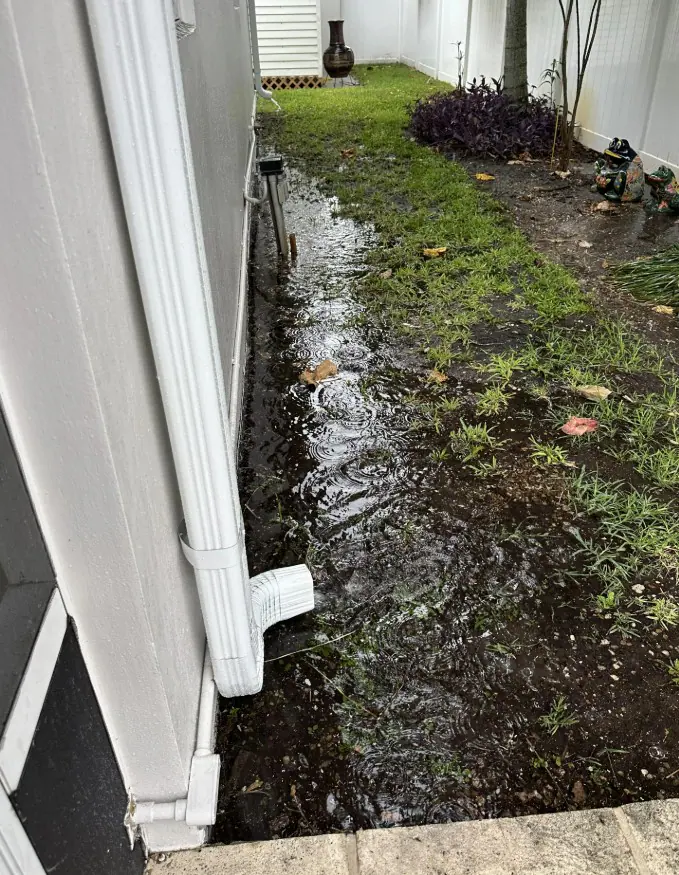
Foundation Drainage in North Texas
Expansive clay makes consistent moisture management important, but a drainage contractor should not present yard work as a structural repair. Cracks, plumbing leaks and foundation movement may require separate qualified evaluation.
Collection alone does not remove water. Gravity systems require a continuously lower, maintainable discharge point. Pumped systems require a protected pressure discharge and safe service access. In both cases, the destination must be confirmed before installation.
A useful scope identifies the input, collection point, material type, pipe or surface route, access constraints, outlet protection and restoration. It should also explain why this method fits better than the common alternatives.
Decision guide
| Observed condition | Direction to evaluate | Reason |
|---|---|---|
| Water arrives mainly from a downspout | Underground downspout drainage or source control | Keep concentrated roof water in a solid conveyance route. |
| Water collects at one visible low point | Surface inlet or limited regrading | Capture the water where it actually concentrates. |
| Broad runoff follows a shallow path | Grading or a swale | A stable surface route may be simpler than another buried pipe. |
| An existing drain once worked | Inspection, cleaning or repair | Locate the failed component before replacing the system. |
| No gravity outlet is physically available | Outdoor sump pump system | Collect water in a serviceable basin and pump it to a protected outlet only after elevations rule out gravity. |
Local drainage guidance
Use the city guide for local drainage context, then return to this central service page for system design, correct installation and failure patterns.
Each city guide combines the regional drainage method with verified local context, common property conditions and direct links to the relevant problem and service pages.
Foundation Drainage FAQ
These answers are general. Final recommendations depend on the property, elevations, utilities and outlet.
No. Drainage work manages water; structural conditions require evaluation by the appropriate qualified professional.
Distance alone is not the design target. The route must reach a stable lower path or controlled outlet.
No. Finished grade and materials must preserve required clearances and drainage features.
Downspouts, roof valleys, surface slope, irrigation and the time wet areas remain after rain.
Assessment first
Photos during or immediately after rain are especially useful.