Problem in Forney
Low Spot Holds Water
An isolated depression may accept a surface inlet, shallow regrading or a combination—but only if collected water has somewhere appropriate to go.
See causes and solutions →
Forney, Texas yard drainage
Forney’s public stormwater network includes channels, swales, roadside ditches, yard inlets and underground pipes. A home’s private drainage route should be identified within that larger system without assuming every visible inlet is City-maintained.
Measure the low area, contributing slopes and the time water remains.
Keep concentrated inputs separate from subsurface collection.
Use official local guidance without replacing a property-level elevation check.
Problems evaluated in Forney
Each condition can have several causes. The photograph identifies the symptom; the assessment identifies the source, route and outlet.
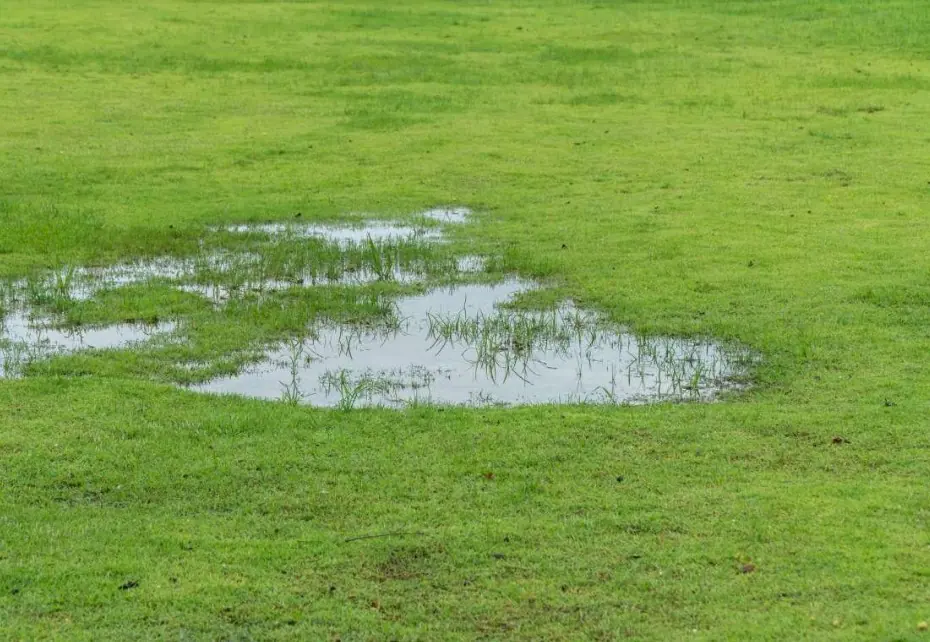
Problem in Forney
An isolated depression may accept a surface inlet, shallow regrading or a combination—but only if collected water has somewhere appropriate to go.
See causes and solutions →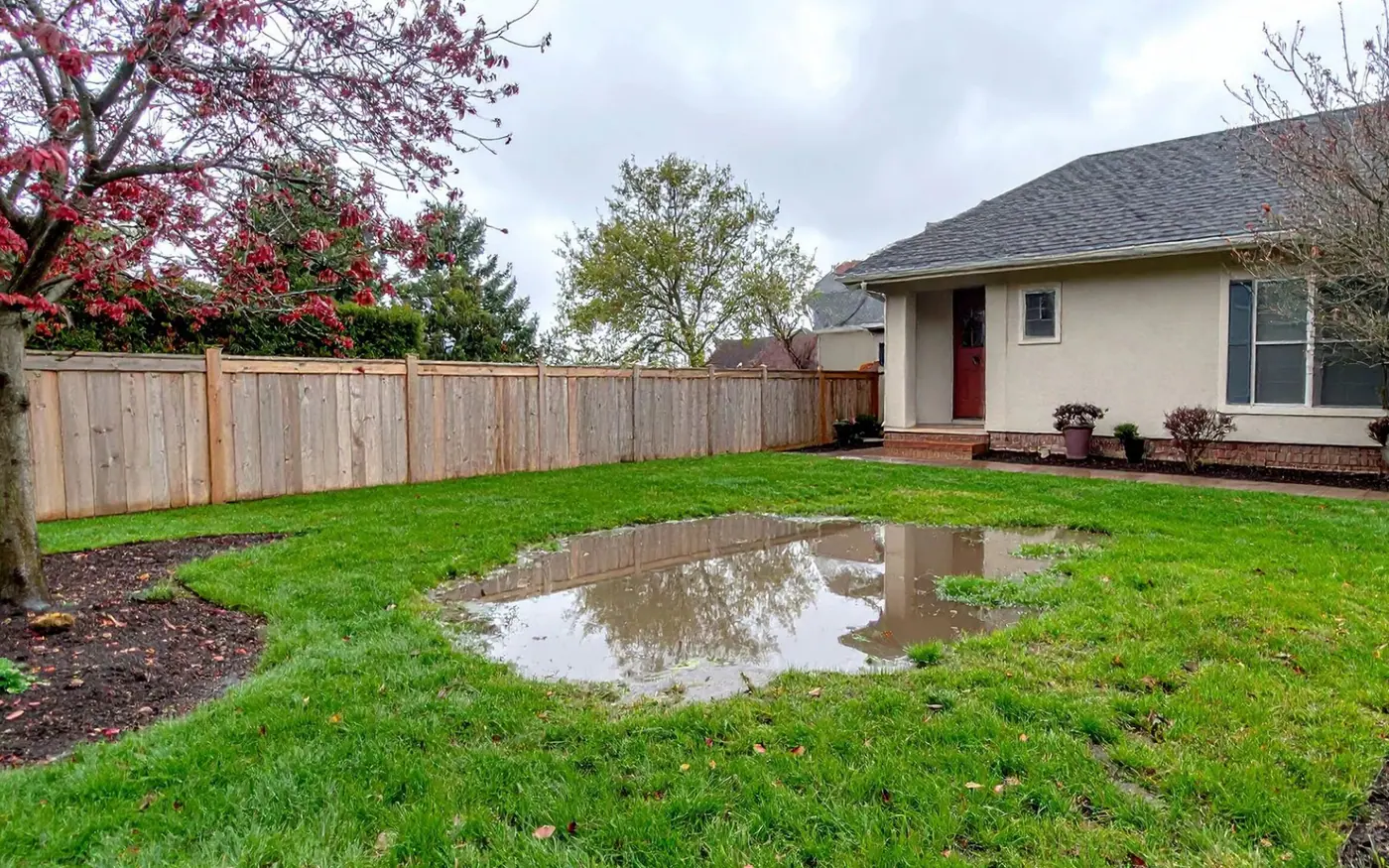
Problem in Forney
Fast flooding points to how much water arrives and where it comes from. Roof areas, neighboring grade and hard surfaces may be contributing more volume than the visible low spot suggests.
See causes and solutions →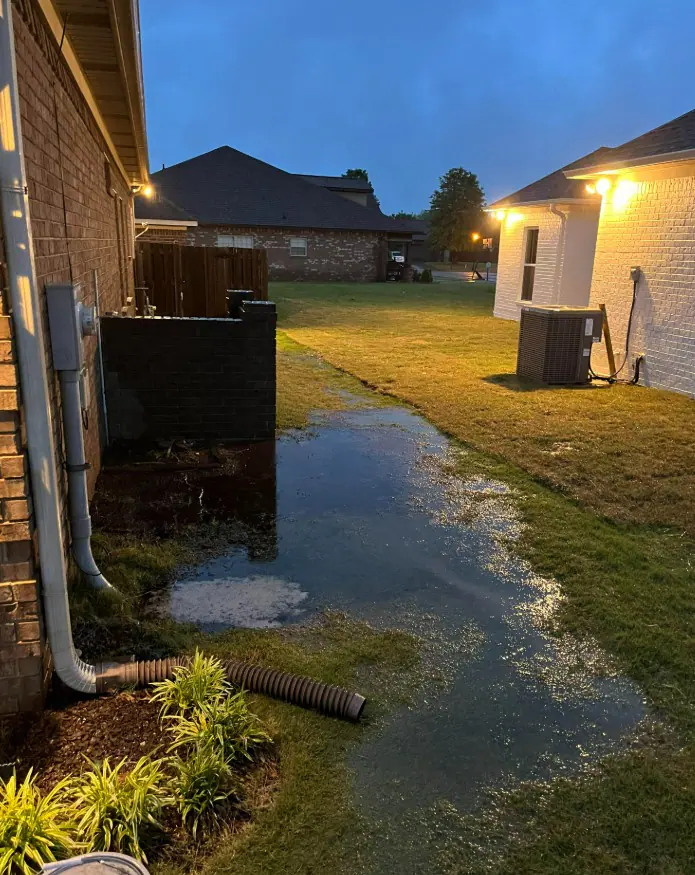
Problem in Forney
One downspout can release a large roof area into a small patch of soil. Keeping that water contained in solid pipe may be more direct than treating the whole lawn.
See causes and solutions →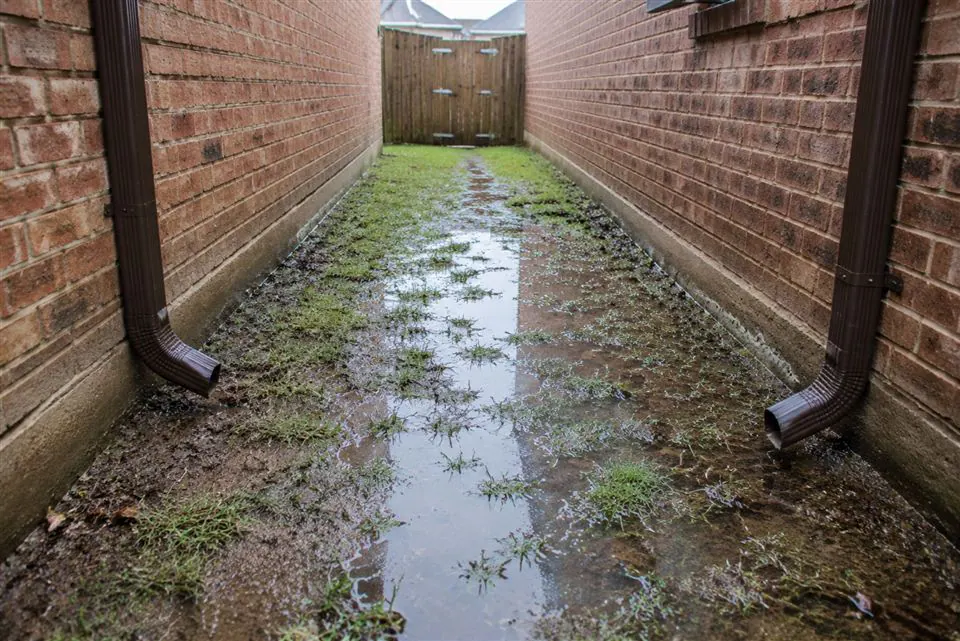
Problem in Forney
Narrow side yards often receive roof water from two structures while fences, utilities and limited elevation restrict the available route.
See causes and solutions →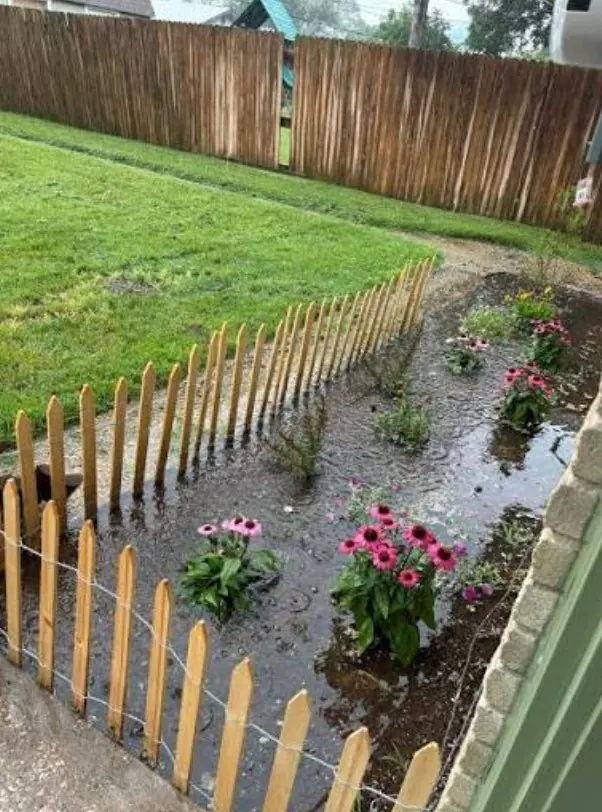
Problem in Forney
Water may follow a shared low corridor or enter through fence gaps. The assessment should document the route, property constraints and a safe outlet before proposing interception.
See causes and solutions →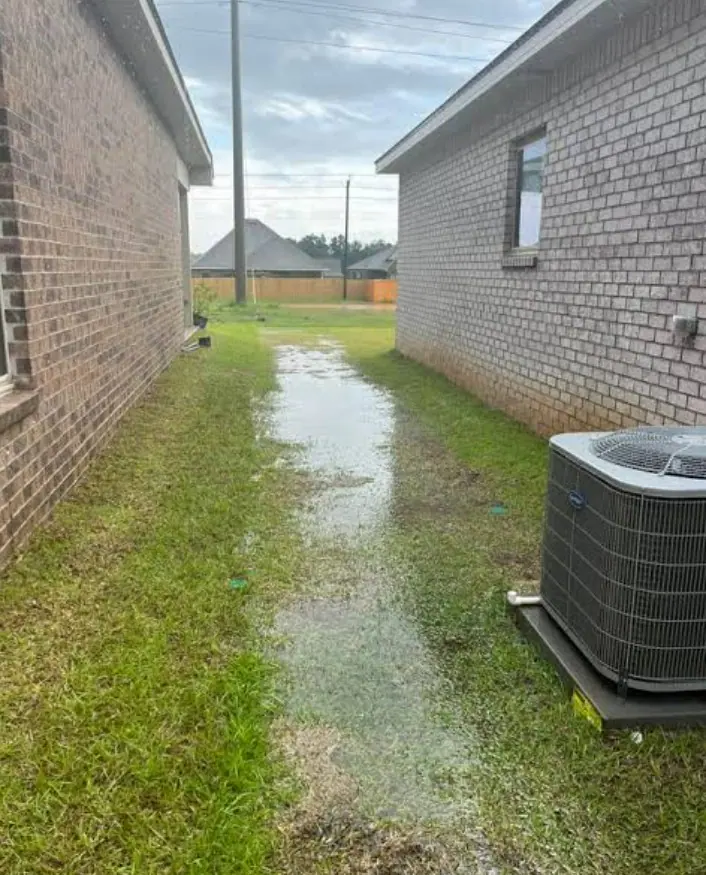
Problem in Forney
The useful question is not only how deep the water becomes, but whether the surface has a continuous lower route and whether an existing system can still discharge.
See causes and solutions →These images illustrate drainage conditions Texas Yard Drainage can evaluate. They are not presented as completed projects or as photographs taken at the listed city.
Problem → cause → solution
A visible puddle can be fed by roof runoff, a blocked surface path, an isolated low point, saturated soil or an existing line that can no longer discharge. Those inputs are separated before materials are chosen.
Yard drainage company in Forney, Texas
This city guide connects the problems homeowners see with the drainage method, site conditions and outlet questions that determine a complete solution.
A grass swale or ditch is part of the drainage system when it carries water safely. Filling it or placing a fence across it can create a new low point upstream.
A catch basin collects a visible low point. Underground downspout drainage carries roof water in solid pipe. A French drain collects water moving through saturated soil when continuous fall and a verified outlet exist.
Solid downspout pipe can separate roof water from a shared side-yard corridor. The outlet and overflow path still need to function during heavier rain.
Texas Yard Drainage evaluates route length, utilities, gates, hardscape, excavation, discharge protection and final restoration before defining the scope. Review the DFW drainage cost factors or compare all yard drainage services.
Verified Forney context
Municipal information describes the larger system. Elevations, ownership and the finished route on the property still determine the recommendation.
The City describes a network of public and private structures that controls the quantity, timing and distribution of storm runoff.
Forney lists grass swales, roadside ditches, curb inlets, outfalls and yard inlets among visible parts of the stormwater system.
Official local sources: Forney Storm Drain Information and Forney Drainage Study. External sources provide public context and do not imply City endorsement of Texas Yard Drainage.
Central drainage services
The city page summarizes the options. Each central service page explains best-fit conditions, correct installation and common failure patterns in detail.
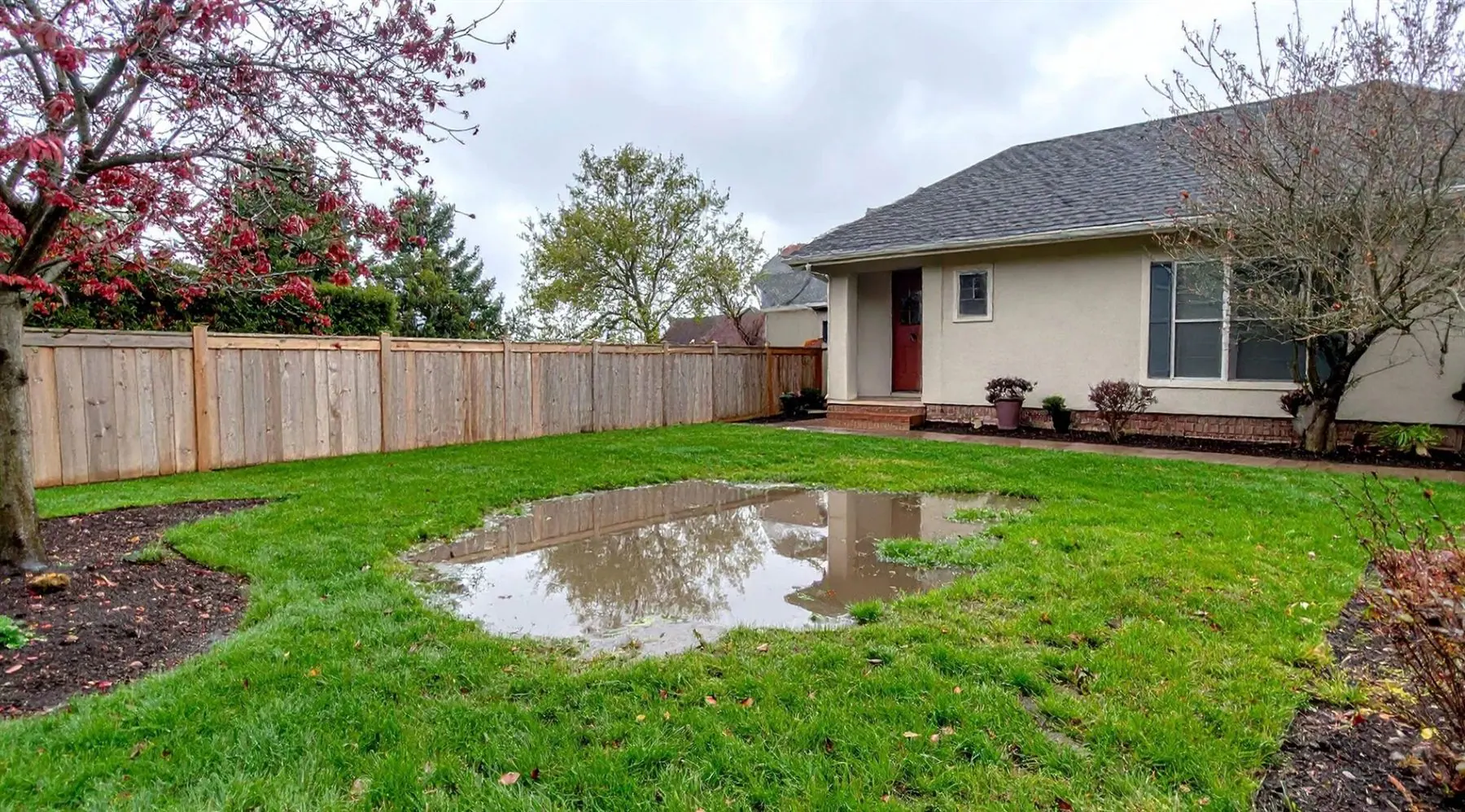
Diagnosis-led drainage
A durable yard drainage plan starts by separating roof runoff, surface flow and saturated soil before choosing an inlet, pipe or grading change.
How this service works →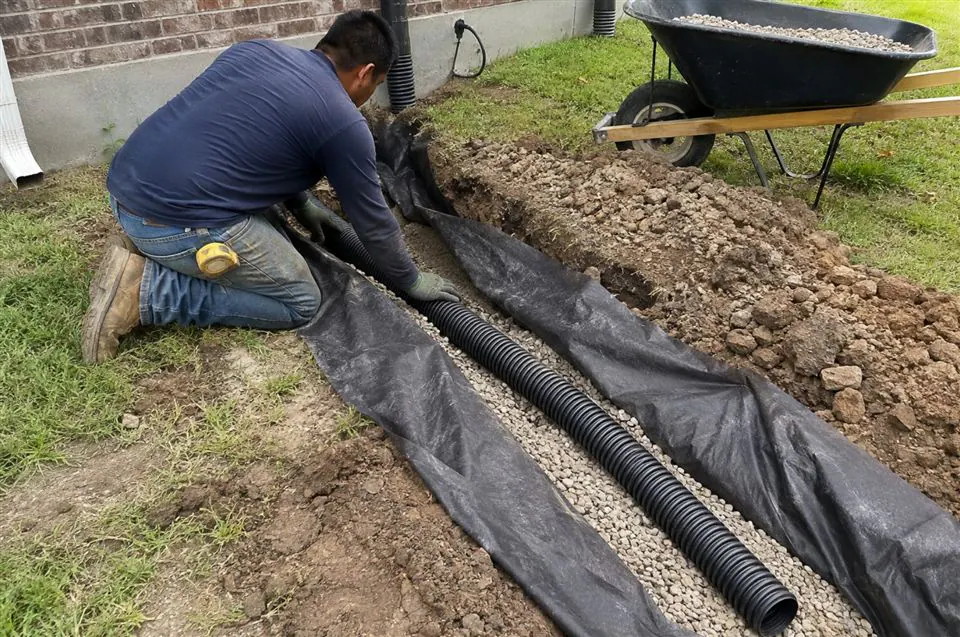
Subsurface drainage
French drain installation in Dallas requires more than perforated pipe: fabric, clean aggregate, continuous fall and a verified outlet must form one working path.
How this service works →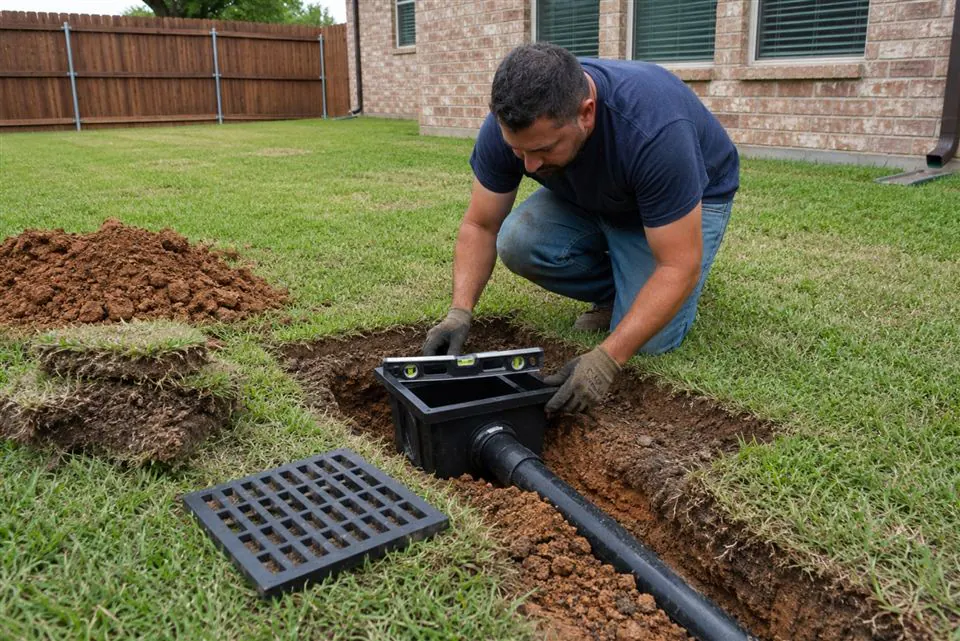
Direct surface collection
A properly located surface inlet captures runoff where it naturally concentrates, then sends it through solid pipe toward a verified outlet.
How this service works →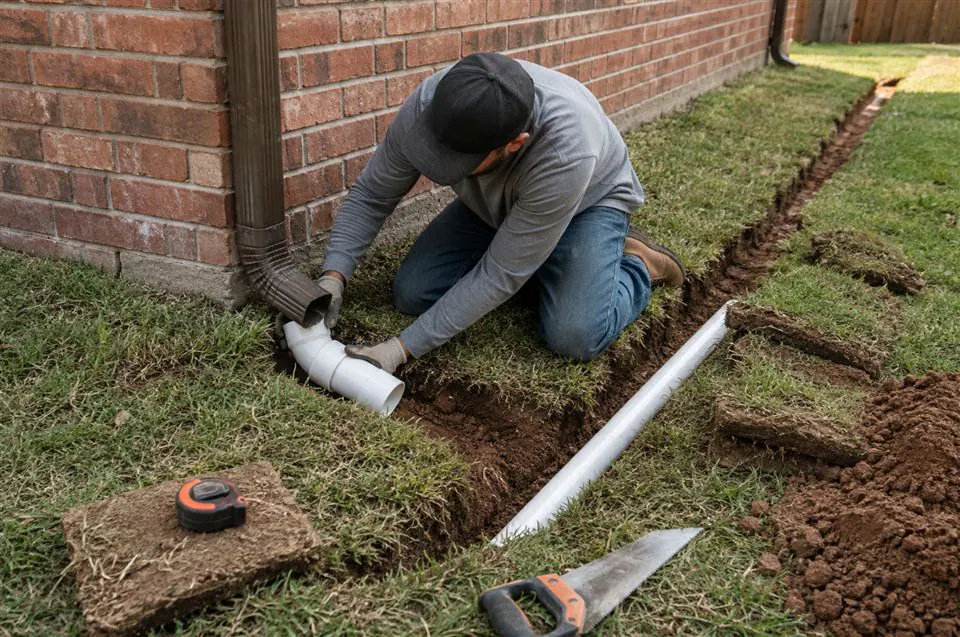
Roof runoff control
Roof water is a concentrated input. Solid conveyance pipe can carry it away from the foundation when connections, cleanouts and the discharge point remain serviceable.
How this service works →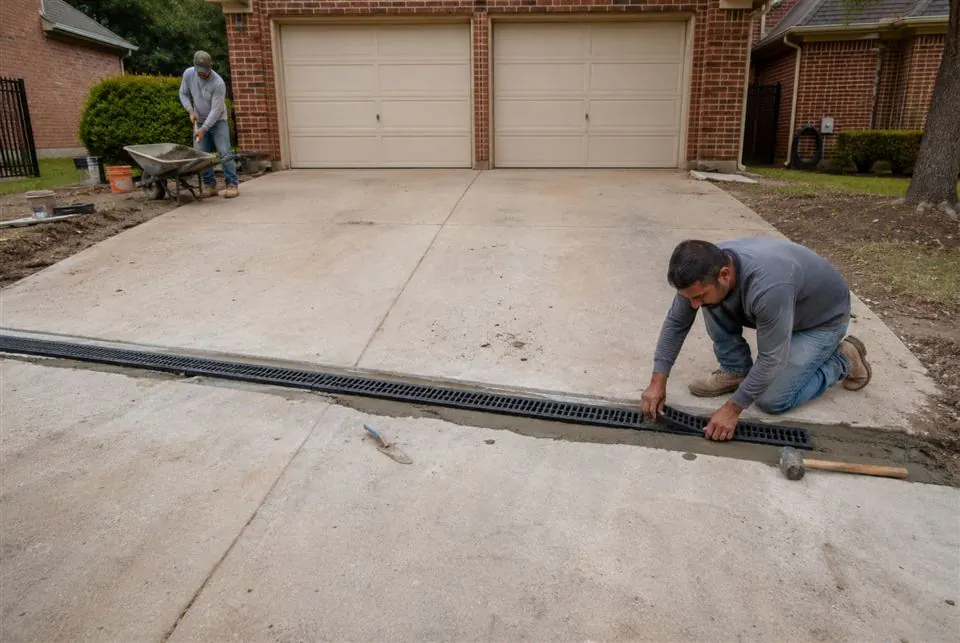
Linear surface interception
Channel drains and trench drains intercept sheet flow across Dallas driveways, pool decks, patios and thresholds, then convey it through solid pipe to a verified outlet.
How this service works →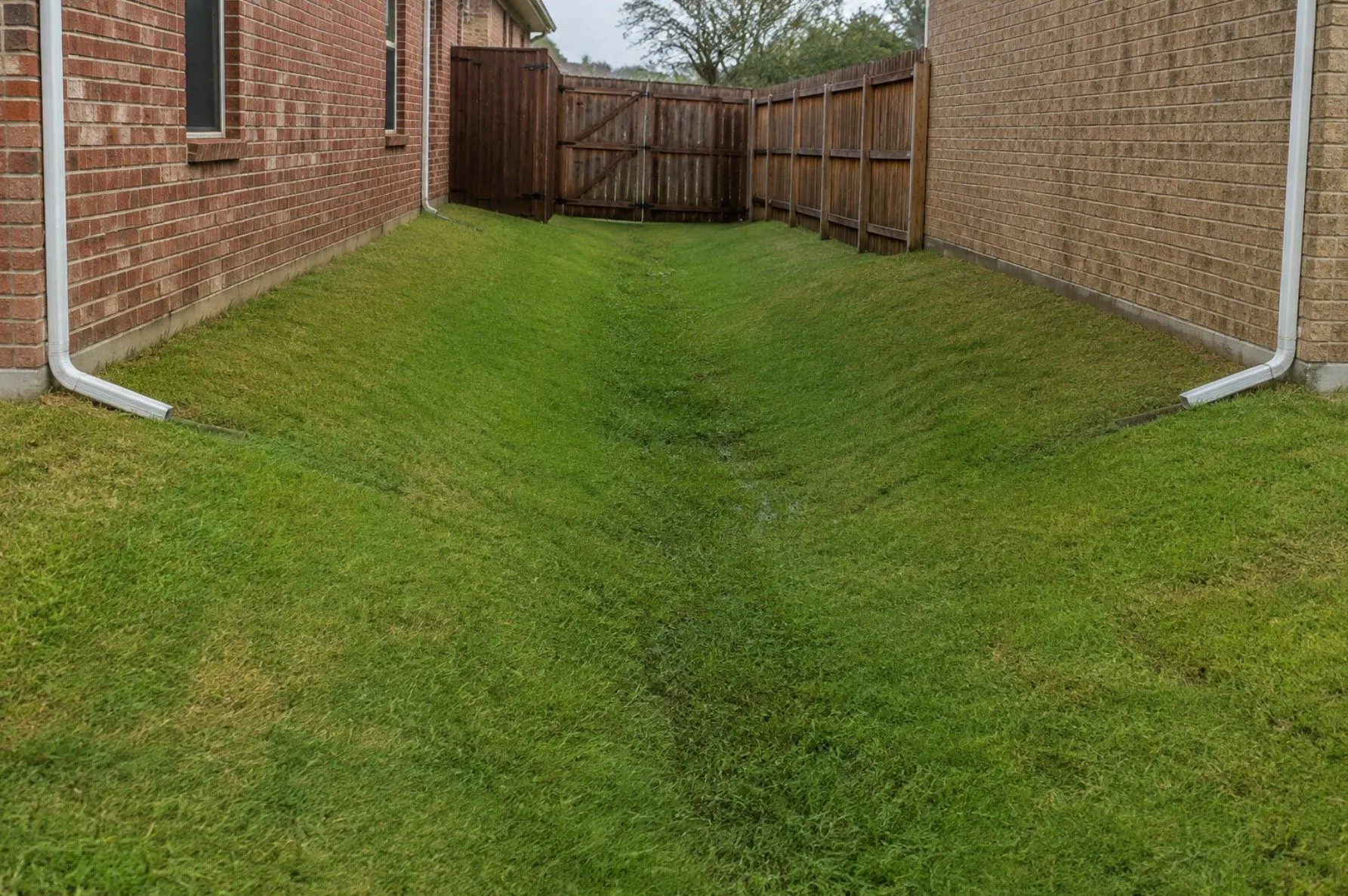
Surface flow by elevation
Sometimes the simplest durable solution is reshaping a shallow path so runoff moves across a stable surface instead of entering another buried pipe.
How this service works →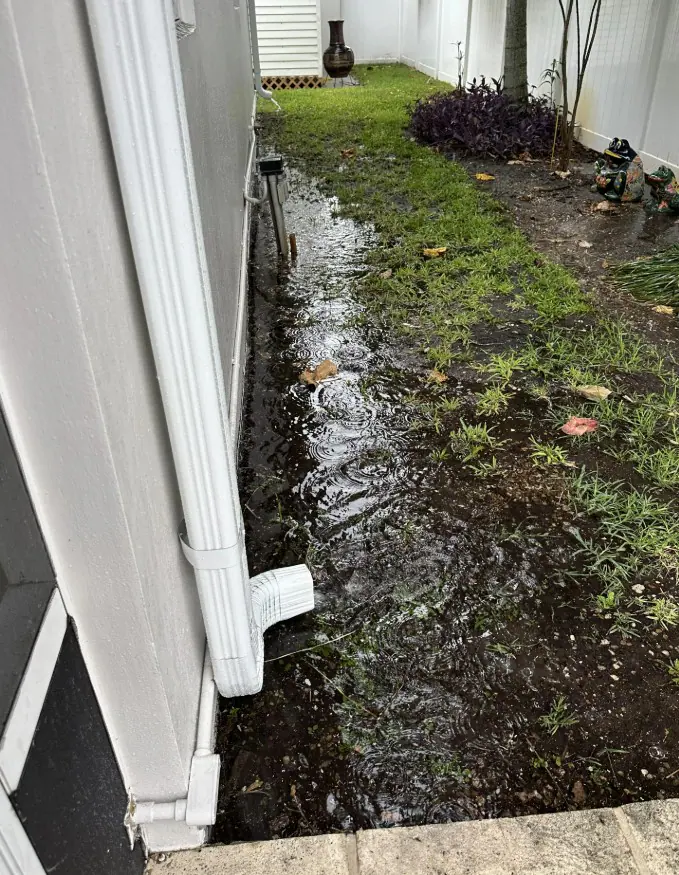
Protect the perimeter
The goal is not a generic pipe around the house. It is to control roof water, surface grade and saturated corridors that keep moisture concentrated near the foundation.
How this service works →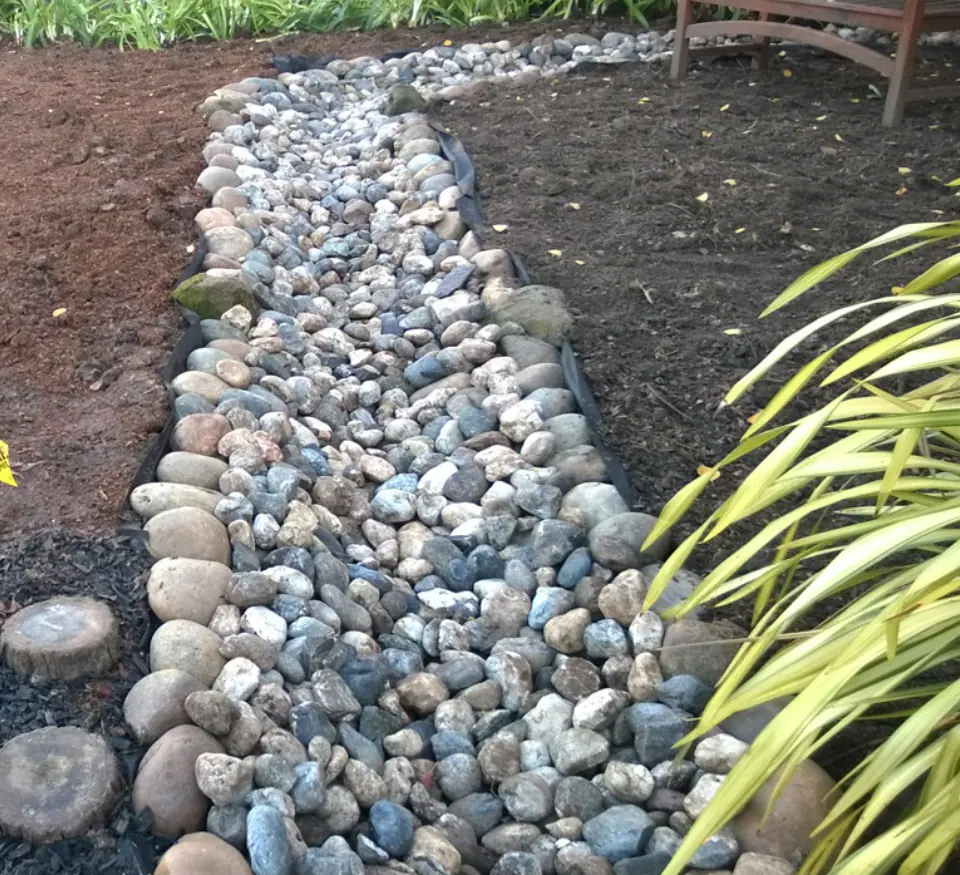
Stable surface drainage
Erosion indicates that water is moving with enough concentration or speed to carry soil. The plan should control the source and stabilize the route—not only refill the washed area.
How this service works →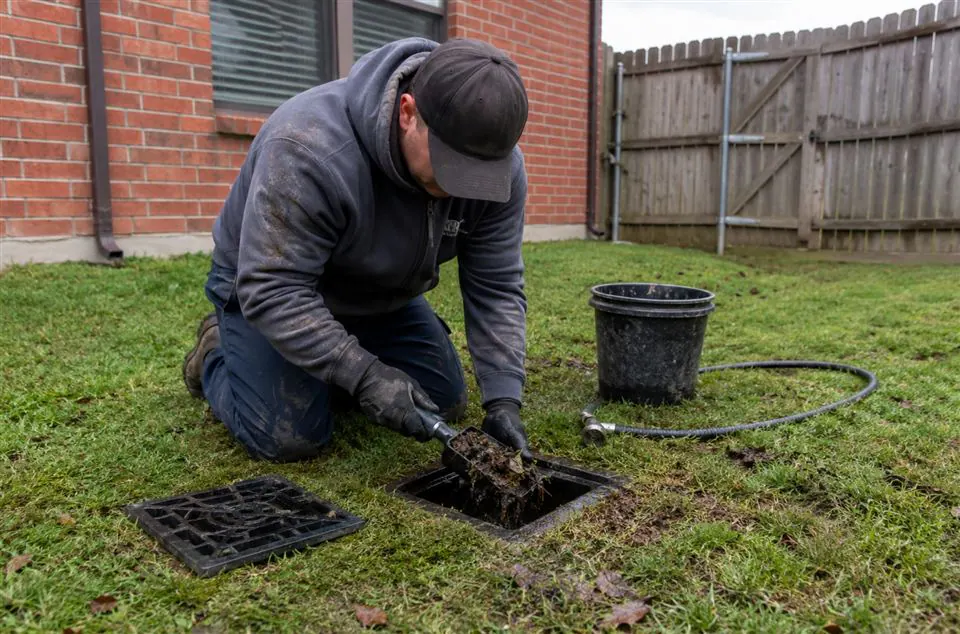
Restore existing systems
A slow or overflowing drain may have a blocked inlet, settled pipe, root intrusion, damaged fitting or buried outlet. Inspection should isolate the failure first.
How this service works →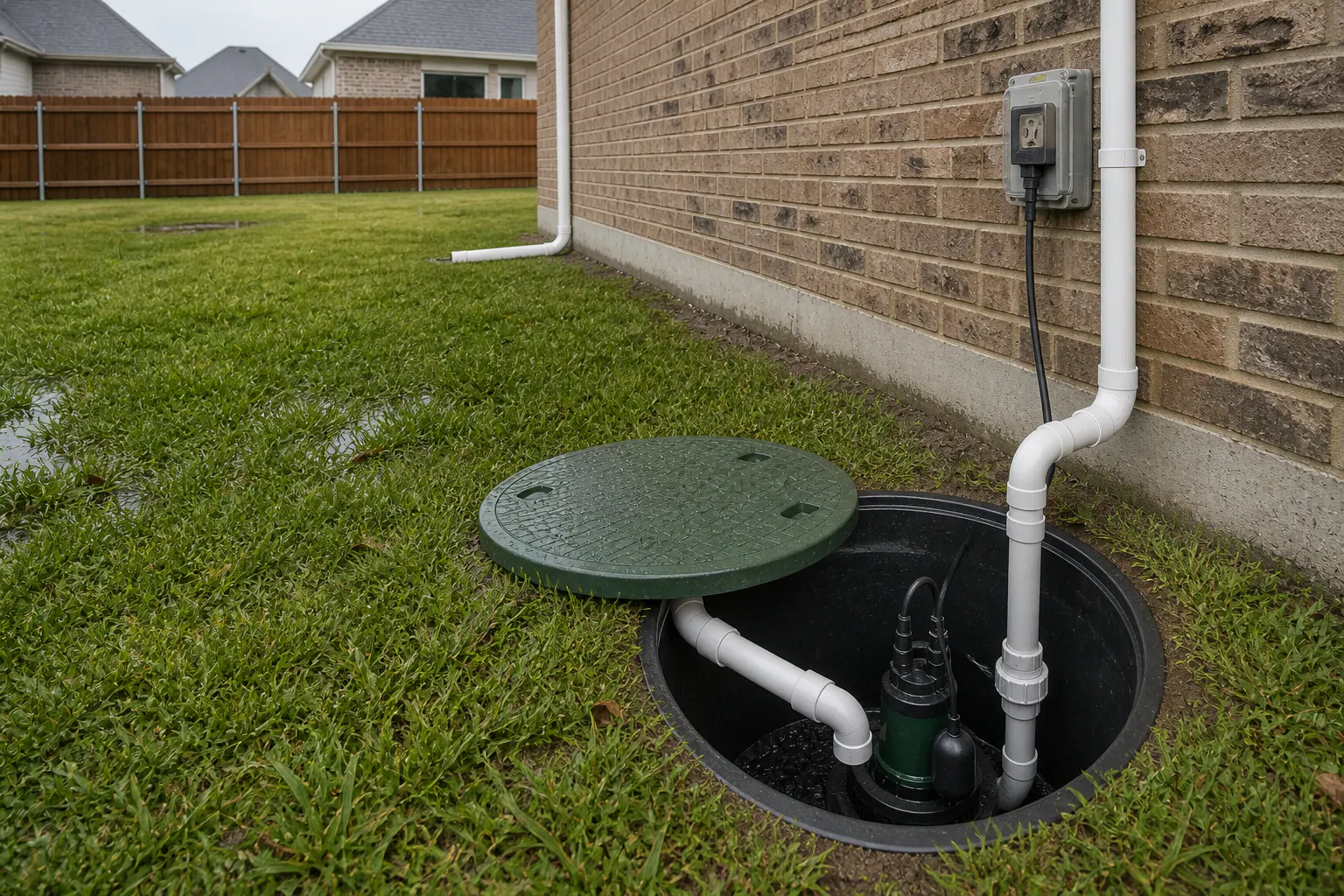
Pumped yard drainage
An outdoor sump pump collects water in a serviceable basin and lifts it through a pressure discharge line when the yard is too low for a dependable gravity outlet.
How this service works →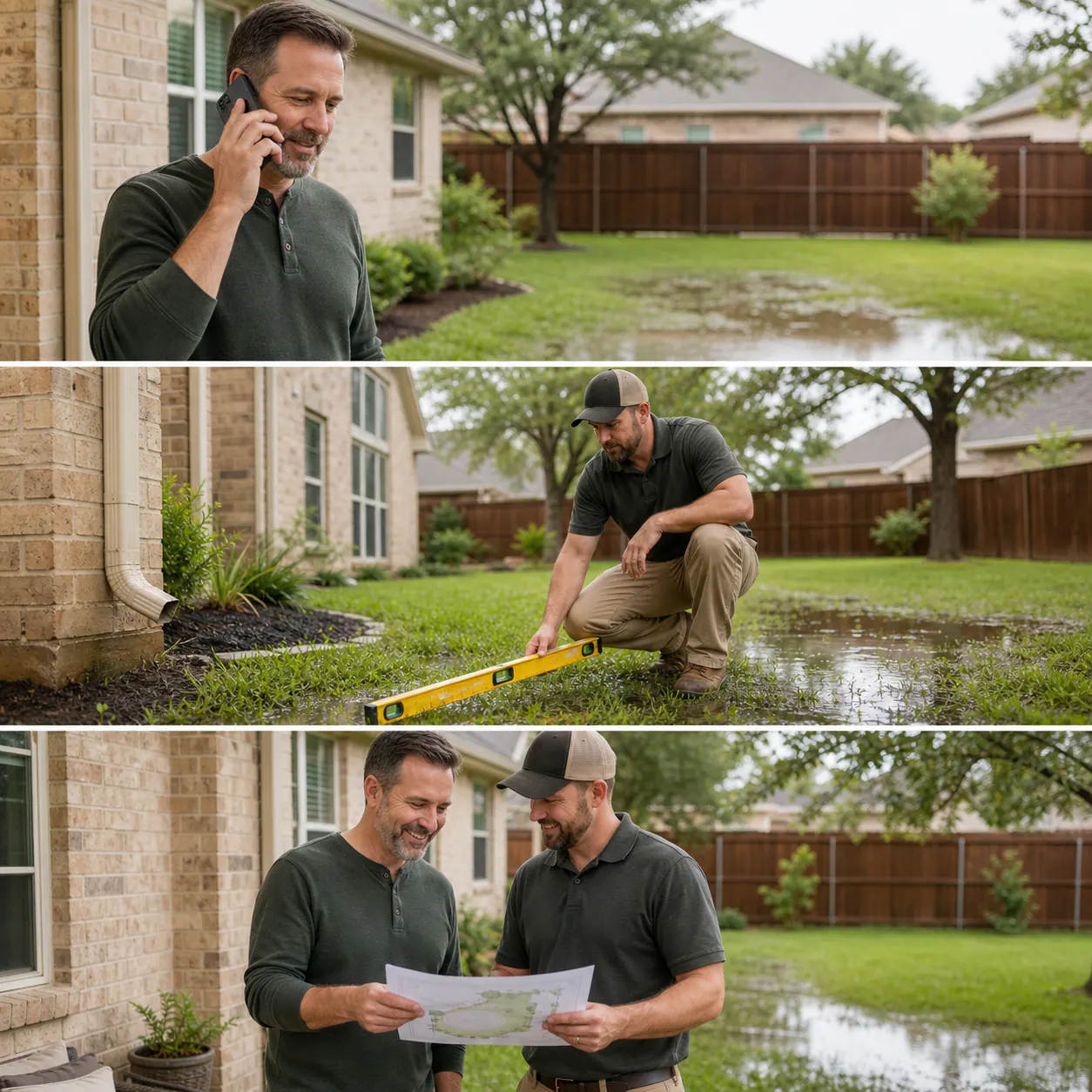
Diagnosis before estimate
A free property drainage assessment documents where water begins, how it crosses the yard and whether a practical outlet exists before a drainage estimate is prepared.
How this service works →Service coverage
Forney service is confirmed by address. Public and private components, drainage easements and newer subdivision routes are identified before the work scope is defined.
Neighborhood or street names confirm route coverage only. They do not prove that two properties share the same grade, soil saturation or legal outlet.
Forney yard drainage FAQ
These answers are general. Final recommendations depend on the property, elevations, utilities and outlet.
No assumption should be made from appearance alone. Forney describes both public and private stormwater components; ownership and maintenance should be confirmed.
A swale provides a visible surface route and can serve as overflow when a buried line reaches capacity. Blocking it can move water toward a home or neighboring lot.
No separate Forney office is claimed. Texas Yard Drainage is a Dallas–Fort Worth service-area business, and assessment coverage is confirmed by property address.
No. Roof water, fast surface runoff, a defined low point, saturated soil and a failed existing drain require different first choices.
Send the property address or ZIP code, wide photos during rain, close photos of downspouts and inlets, and the approximate time the water remains.
Elevation, route length, excavation access, utilities, water volume, outlet work, hardscape and final lawn or landscape restoration all affect scope.
Assessment first
Send the property address, ZIP code and photos during or immediately after rain.